ENGINEERING FEASIBILITY RESEARCH
Connected Medical-Device
Accessory Compatibility
Illustrative feasibility engagement | use conditions, interfaces and evidence route
SECTOR
Medtech hardware
ILLUSTRATIVE TIMING
6-8 weeks
DECISION
Development boundary
Decision to be made
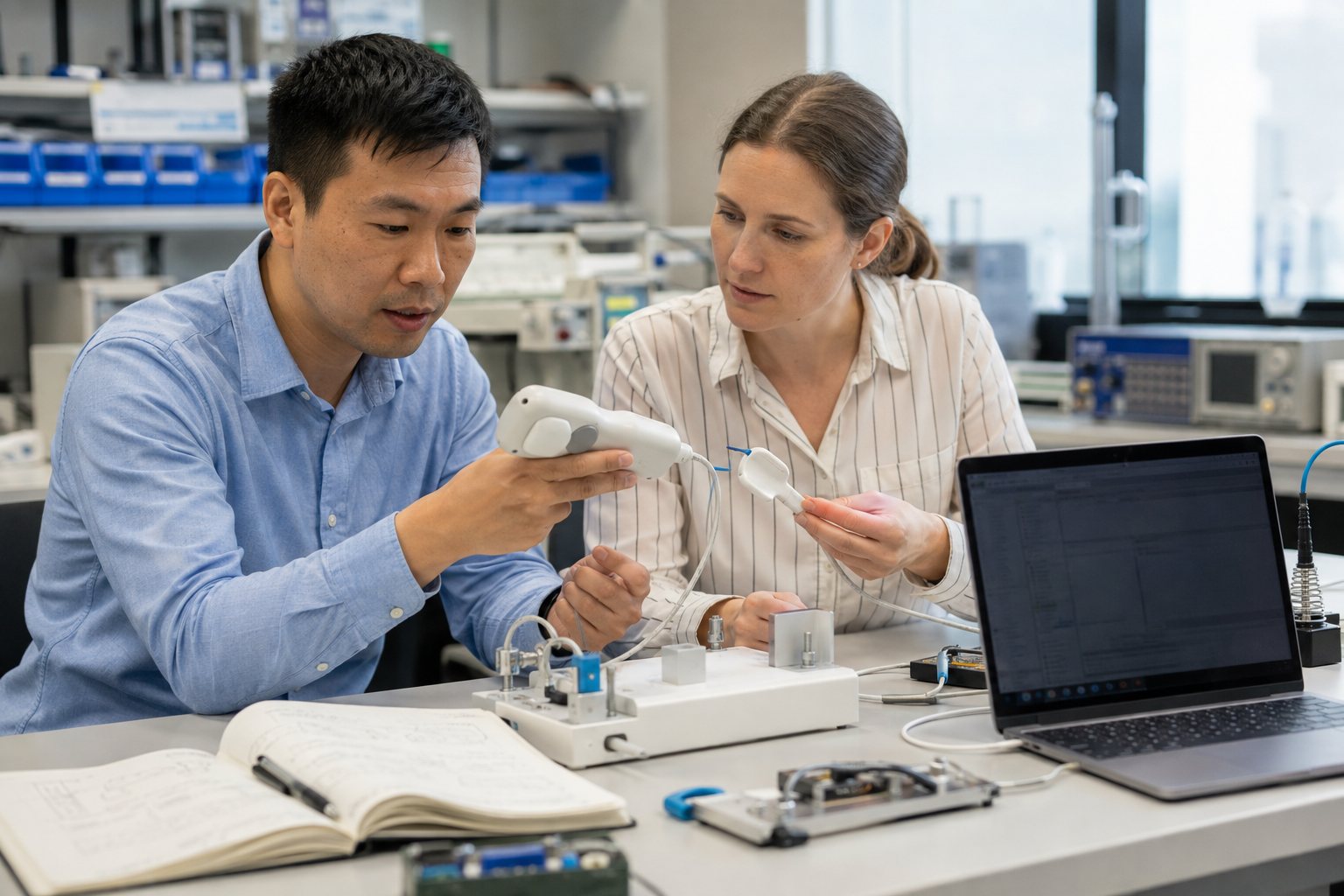
Decide whether a hypothetical wired accessory can credibly integrate with a selected monitoring platform across its intended use conditions, which interface assumptions require controlled verification, and whether a formal development programme is warranted.
Project Context
A hypothetical product team has developed a compact accessory intended to connect to a clinical monitoring platform. The team has bench functionality, but needs to distinguish a plausible connection from an evidence-backed development route before committing to design controls, external verification capability and a formal development plan.
Illustrative Project Assumptions Only
Working assumption | Illustrative detail |
|---|---|
Integration boundary | One accessory, one host platform family, two intended care settings and a defined wired interface. |
Use conditions | Routine setup by trained staff, repeat connection cycles and cleaning conditions appropriate to the proposed setting. |
Evidence boundary | Interface, workflow and development feasibility. Not clinical validation, certification, approval or a safety claim. |
Contributors | Product engineering, biomedical systems input, clinical workflow perspective and targeted external test capability review. |
Compatibility Trace
Rather than treating the accessory as a generic prototype, the study traces each feasibility question to the evidence needed before a development commitment.
Requirement lens | Question to resolve | Illustrative evidence route |
|---|---|---|
Physical interface | Will the connector, retention and cable route work within the selected set-up conditions? | Dimensional review, handling observation and fixture capability check. |
Signal and power behaviour | Which interface behaviours need controlled verification before integration claims are made? | Architecture review, bench evidence review and external test-plan scoping. |
Human workflow | Where could set-up, cleaning or handover introduce a use-related constraint? | Structured workflow input and use-scenario review. |
Development route | What must be defined before a formal verification plan is proportionate? | Requirements trace, open-question register and capability shortlist. |
Illustrative Delivery Method
- Translate the intended use and host-platform boundary into a concise compatibility question set.
- Scout suitable external providers for any required controlled evaluation. August Research does not own testing facilities.
- Use input from engineering and workflow contributors to separate interface unknowns from formal verification needs.
- Conclude with a development decision: proceed to planning, proceed with conditions, reshape the proposition or defer.
Illustrative Outputs
Output | Decision use |
|---|---|
Compatibility trace | Links each critical assumption to available evidence, limitation or next action. |
Use-condition matrix | Shows where handling, cleaning, set-up or environment may change the route. |
External capability brief | Defines the specialist capability to scout for a focused next check. |
Development decision pack | Frames an evidence-bounded recommendation and the conditions for moving forward. |
Note:
This is a hypothetical illustrative engagement, not a client outcome. The values, methods, contributors, timeline and possible outputs are illustrative. Actual primary-research timing depends on stakeholder and provider response, technical information, access to suitable facilities and project scope. The work does not establish certification, regulatory approval, formal design verification, clinical performance or a universal compatibility claim. Those responsibilities remain with qualified providers and responsible parties.
Readiness Questions Before Starting
- Which host-platform version, accessory configuration and intended setting define the practical boundary?
- Which contributors and external capabilities can provide the right evidence without overstating its meaning?
- What decision criteria would make a formal development route proportionate?
Let’s Discuss Your Project
Start with the interface question
Tell us what needs to connect, the intended operating conditions and the commitment you need to make. We can shape a feasibility route around the unresolved assumptions before formal development work begins.