SECONDARY R&D RESEARCH
White Space Opportunity Analysis
Identify underexplored areas of science and technology that may hold meaningful future potential and warrant deeper R&D investigation.
White Space Opportunity Analysis looks beyond the topics attracting the greatest volume of research. It identifies areas receiving limited attention today, examines whether they address an important unresolved problem and tests whether new scientific, technical, regulatory or industry developments could make them more promising in the future. The purpose is to help researchers and R&D leaders decide where further investigation may be justified.
THE DECISION THIS SERVICE SUPPORTS Which underexplored research areas show enough scientific promise and future relevance to justify exploratory work, additional investment, collaboration or continued monitoring?
When this service creates value
Research portfolio planning
Identify scientific and technical areas that may deserve a place in the exploratory R&D portfolio.
Unresolved problem discovery
Find important technical problems that established research directions have not adequately solved.
Adjacent science exploration
Assess whether a mechanism, material or process emerging elsewhere could open a new research direction.
Future requirement anticipation
Translate expected regulatory, environmental, supply or performance demands into research questions.
Questions the research can answer
- Which parts of the domain receive limited research attention despite an important unresolved need?
- Is activity genuinely limited, or is it hidden by terminology, adjacent disciplines, unpublished work or fragmented evidence?
- What recent discovery, enabling technology, regulatory change or industry requirement could improve future relevance?
- Which areas merit exploratory research, increased funding, collaboration, monitoring or deliberate exclusion?
DEFINING THE OPPORTUNITY
White space is not one kind of gap
The analysis distinguishes why an area appears underexplored. This prevents low publication or patent activity from being mistaken for research potential and helps determine whether the area deserves deeper scientific investigation.
Problem white space
An important failure mode or technical requirement remains unresolved by the dominant research approaches.
Mechanism white space
A scientific mechanism is plausible but has received limited investigation in the target material, process or system.
Evidence white space
Early claims or prototypes exist, but application-relevant, comparative or long-duration evidence is still limited.
Transition white space
Regulation, resource constraints, new manufacturing methods or future performance demands create new research questions.
Adjacency white space
A principle established in another discipline has not been sufficiently investigated under the target conditions.
False white space
Activity is sparse because the premise is weak, the problem lacks importance, decisive barriers persist or terminology hides existing work.
How this differs from adjacent services
Service | Primary question |
|---|---|
Technology Landscape Analysis | What solutions, architectures and participants currently exist? |
Patent Landscape Research | Where is invention activity concentrated, protected or changing? |
R&D Trend Analysis | In which direction is research and innovation activity moving? |
Emerging Technology Assessment | How credible and ready is a selected emerging technology? |
White Space Opportunity Analysis | Which underexplored research areas may have meaningful future potential and deserve deeper investigation? |
Technology Scouting | Which specific external technologies or partners could address a defined requirement? |
RESEARCH ARCHITECTURE
How the research is executed
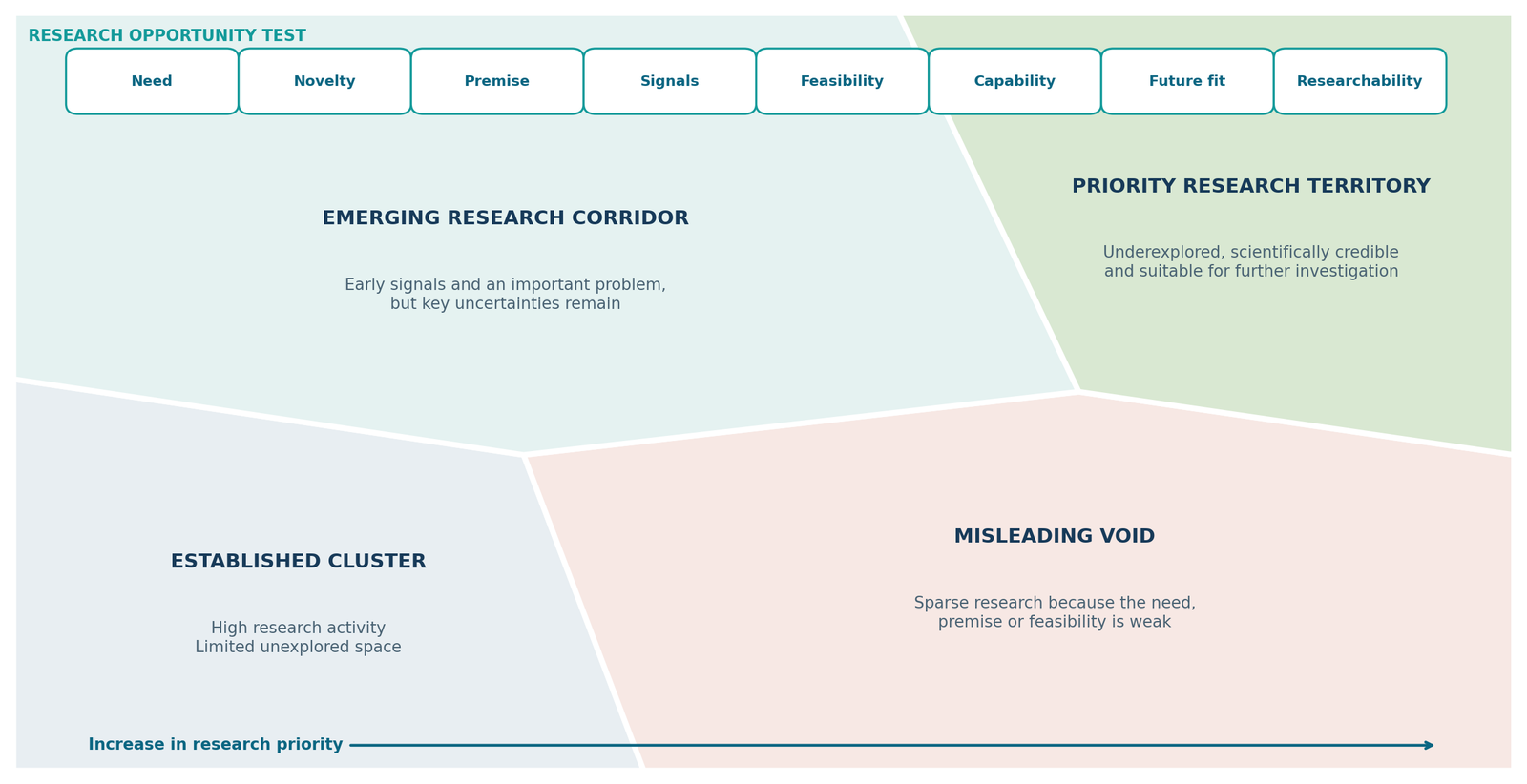
The work is organised as a research opportunity terrain rather than a list of empty topics. Each area is mapped against surrounding activity, investigated for hidden evidence and tested for scientific promise, feasibility and future relevance before it is recommended for further R&D.
Eight connected research modules
Module | What is examined | Working output |
|---|---|---|
1. Research boundary | Scientific domain, application, problem, geography, time horizon and definition of underexplored. | Research question protocol |
2. Domain decomposition | Materials, mechanisms, processes, architectures, performance parameters and application conditions. | Research taxonomy |
3. Activity baseline | Publications, patents, projects, grants, conferences, laboratories, companies and technical programmes. | Research intensity map |
4. Unresolved problem map | Failure modes, technical limitations, conflicting results and requirements not met by established approaches. | Problem and constraint map |
5. White-space detection | Low-activity intersections, missing combinations, discontinuities and weakly connected research clusters. | Candidate white-space register |
6. Hidden-evidence check | Synonyms, adjacent disciplines, non-English sources, patent families and industry terminology. | Validated activity baseline |
7. Promise assessment | Scientific premise, early signals, feasibility, enabling changes, capability fit and future relevance. | Research opportunity cards |
8. R&D decision translation | Explore, increase investment, collaborate, run a feasibility study, monitor or deprioritise. | Research priority portfolio |
OPPORTUNITY PROOF TEST
Low research activity is only the starting signal
August Research assesses each potential white space through separate research tests. An area can appear novel but still be unsuitable for investment because the scientific premise is weak, critical experiments are impractical or the future need is uncertain. Keeping the tests separate allows R&D teams to see exactly why an area was prioritised.
Unresolved need
Is the scientific or technical problem important, persistent and clearly defined?
Research novelty
Is the area genuinely underexplored after terminology and adjacent fields are considered?
Scientific premise
Is there a credible mechanism or body of knowledge supporting further inquiry?
Emerging signals
Do early papers, patents, grants, prototypes or conference activity indicate growing possibility?
Research feasibility
Can decisive questions be investigated using accessible methods, materials, equipment and data?
Capability alignment
Does the area align with the client’s expertise, platforms, partnerships and research horizon?
Future relevance
Could regulatory, environmental, supply, performance or industry change increase its importance?
Researchability
Can the uncertainty be reduced through a bounded programme with measurable evidence gates?
How research areas are translated into decisions
Action route | When it is appropriate | Next evidence requirement |
|---|---|---|
Initiate exploratory research | The area is underexplored, credible and suitable for a bounded initial programme. | Research questions, hypotheses and first evidence gates |
Increase research investment | Existing internal work is reinforced by stronger external signals and future relevance. | Expanded workstreams, milestones and resource rationale |
Collaborate | The question is promising but depends on specialist knowledge, facilities, data or materials. | Capability gap and collaborator profile |
Run a feasibility study | One or more decisive uncertainties can be tested before a larger commitment. | Experiment, model or technical review plan |
Monitor | Signals are emerging but insufficient for immediate research investment. | Indicators, thresholds and refresh schedule |
Deprioritise | The scientific premise, future relevance or researchability does not support further work. | Documented reason and reconsideration trigger |
WHITE-SPACE DETECTION
How underexplored areas are detected
White space is detected by examining the structure of research activity, not by searching for topics with the fewest documents. August Research looks for meaningful discontinuities, missing combinations and early activation signals, then investigates whether the apparent gap is genuine or simply hidden by terminology, discipline boundaries or incomplete public evidence.
Research activity patterns
Disproportionate silence
Research activity is limited even though the technical problem is persistent, costly or strategically important.
Missing intersections
Two active knowledge areas rarely appear together, such as a promising mechanism under a demanding application condition.
Weak cluster connections
Related publication, patent or project clusters exist but show little transfer of methods, materials or findings between them.
Repeated limitations
Established approaches repeatedly report the same unresolved constraint without a convincing alternative research direction.
Signals that could activate the space
New enabling capability
A recent material, analytical method, manufacturing process, model or instrument changes what can be investigated.
Adjacent-field progress
A mechanism or technique matures in another discipline and may now be testable under the target conditions.
External requirement shift
Regulation, resource scarcity, sustainability targets or future performance demands create a new research need.
Evidence-type divergence
Patents, grants, conferences or industrial programmes begin moving before peer-reviewed literature becomes substantial.
DETECTION RULE: A candidate area advances only when the research gap is verified, the reason for limited activity is understood, a credible scientific premise is present and at least one future activation signal can be identified. Low document volume by itself is not sufficient.
SUPPORTING RESEARCH ACCESS: Depending on scope, the search may draw on 50+ technical and scientific sources, 20+ patent sources, 30+ regulatory and standards sources, 40+ industry and company sources, and language expertise covering 15+ languages. These figures describe access, not ownership or mandatory use.
DELIVERY AND OUTPUTS
Two ways to scope the engagement
Broad white-space scan | typically 5 to 7 weeks
Map a wider scientific or technical domain, screen approximately 15 to 40 candidate areas and identify a smaller set for deeper investigation.
Focused research-priority assessment | typically 6 to 10 weeks
Investigate approximately 3 to 8 candidate areas against detailed scientific questions, feasibility conditions, capability needs and research evidence gates.
What the client receives
- Decision protocol, search taxonomy and traceable evidence register.
- Research activity, problem and constraint maps.
- Research Opportunity Terrain showing established clusters, misleading voids, emerging corridors and priority territories.
- Opportunity cards covering the research question, scientific premise, emerging signals, uncertainties, cross-disciplinary analogies and capability fit.
- Research priority portfolio with explore, invest, collaborate, test, monitor and deprioritise recommendations.
- Monitoring triggers and proposed evidence gates for areas that are promising but not yet ready for investment.
TIMELINE NOTE: Timelines are indicative. Delivery depends on domain breadth, the number of candidate areas, language coverage, patent-family depth, access to full technical records and the level of client-specific capability mapping required.
WHY AUGUST RESEARCH
We investigate the spaces between established research fields
Many white-space studies stop at low publication or patent density. August Research investigates why an area is receiving limited attention, checks whether relevant work is hidden in adjacent disciplines and tests whether the scientific premise and future need are strong enough to justify further research.
Negative-space investigation
Low activity, failed approaches and missing combinations are treated as research findings requiring explanation.
Terminology reconstruction
Synonyms, adjacent disciplines and non-English evidence are checked before an area is labelled underexplored.
Scientific premise testing
Promising language is separated from evidence supporting the underlying mechanism and boundary conditions.
Future-signal triangulation
Papers, patents, grants, programmes, conferences, regulation and industry activity are read together.
Research decision fit
Each area is connected to the client’s capabilities, research horizon and next feasible investigation.
Uncertainty remains visible
Contradictions, unsuccessful routes and unresolved questions stay visible in the final research priority record.
What this service does not claim
The work does not prove that an underexplored area will become successful. It does not constitute freedom-to-operate, patentability or legal advice, and it does not replace laboratory experimentation, engineering design, clinical validation or a formal investment decision. It identifies the research case, uncertainties and next evidence requirements.
Frequently combined with
- Technology Landscape Analysis
- Patent Landscape Research
- Scientific Literature Review
- Regulatory & Standards Intelligence
- Competitive Technology Benchmarking
- Technology Scouting
- Proof-of-Concept Evaluation
WEBSITE PRESENTATION SUGGESTION Use an interactive Research Opportunity Terrain rather than a conventional process ribbon. Visitors can select a candidate area to reveal its research activity, scientific premise, emerging signals, unresolved questions and proposed R&D action. A second toggle can compare Low Activity with Qualified Research Potential. On mobile, present the four terrain zones as stacked panels followed by swipeable opportunity cards.
ILLUSTRATIVE ENGAGEMENTS
Questions this service can investigate
Each engagement begins with a technically bounded decision question. On the website, these topics can appear as floating placards that open into the detailed Phase 2 examples.
Industry and opportunity question | Decision focus |
|---|---|
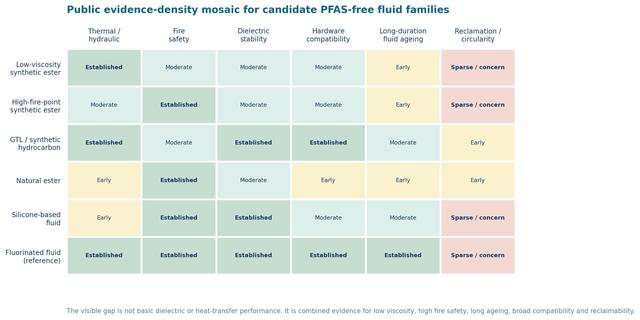
Chemicals and commercial equipment | Is there an underexplored research space around fluorine-free fluid chemistry that can simultaneously address heat transfer, electrical stability, material compatibility, fire behaviour and fluid recovery? |
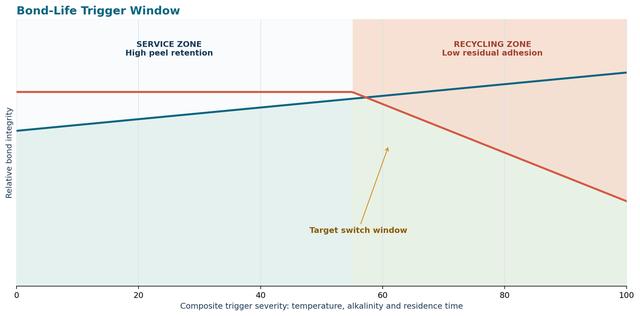
FMCG and packaging | Which thermal, aqueous, enzymatic or chemically triggered bonding mechanisms remain underexplored for separation without loss of seal strength, moisture resistance, line speed or food-contact suitability? |
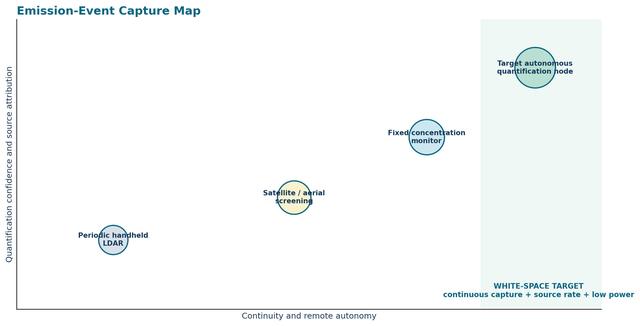
Oil and gas and sensors | Could energy harvesting, low-power sensing and on-device inference create a viable research direction between periodic surveys and power-intensive continuous monitoring? |
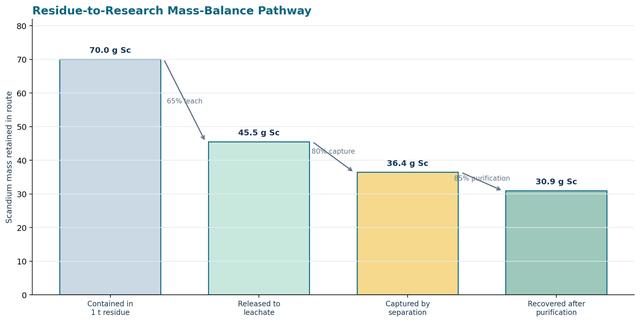
Mining and raw materials | Do combinations of bioleaching, selective complexation and coproduct recovery warrant deeper investigation for residue streams where conventional hydrometallurgy remains difficult to justify? |
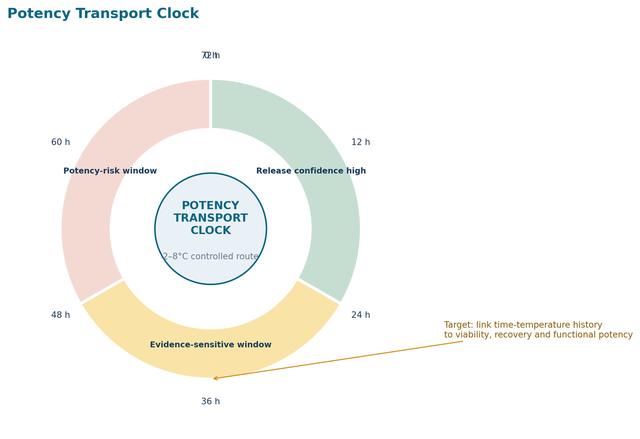
Biopharma and cell therapy | Which formulation, metabolic-control and closed-packaging research directions could support a longer transport window while preserving potency, viability, sterility assurance and chain of identity? |
Let’s discuss your project
If your team needs to identify which underexplored scientific or technical areas deserve further investigation, August Research can define the research boundary, test the evidence and build a prioritised portfolio around your domain, capability base and R&D horizon.
NOTE: The engagement topics above are examples of how the service can be applied. They are not presented as client outcomes. Scope, evidence thresholds, territories, outputs and timelines would be defined for each live project.