ENGINEERING FEASIBILITY RESEARCH
Low-Carbon Mineral Additive
in Existing Concrete Workflows
Illustrative feasibility engagement | processing route, critical assumptions and pilot decision
SECTOR
Construction materials
ILLUSTRATIVE TIMING
5-7 weeks
DECISION
Pilot route
Decision to be made
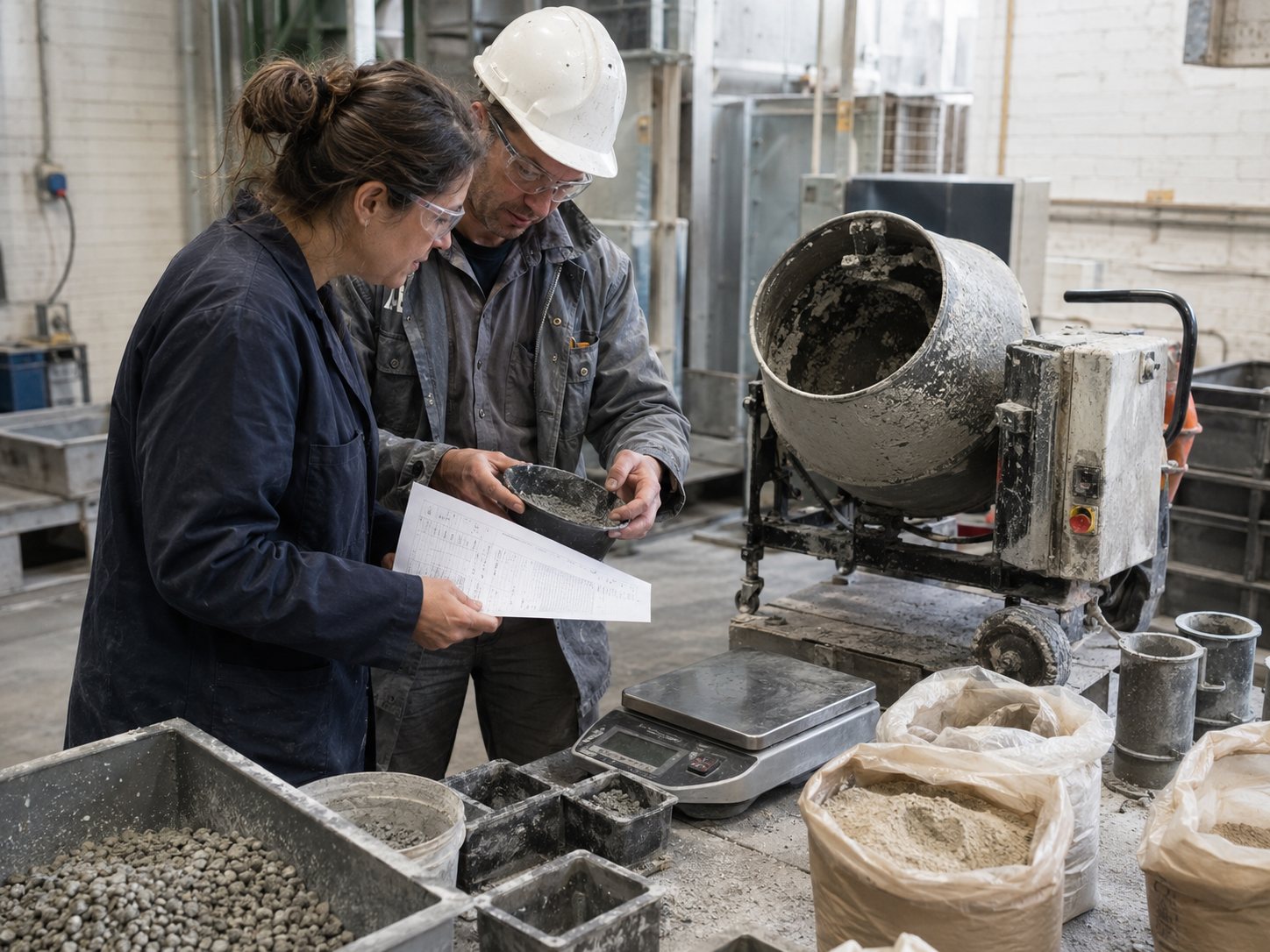
Decide whether a hypothetical mineral additive has a credible route into selected ready-mix concrete operations, which processing and quality assumptions require resolution, and whether a controlled pilot is justified.
Project Context
A hypothetical materials company has developed a mineral additive intended to reduce clinker demand in selected concrete mixes. Bench samples are promising, but the commercial team needs to know whether the material can be stored, dosed, mixed and quality-controlled within routine plant operations before funding a multi-site pilot.
Illustrative Project Assumptions Only
Working assumption | Illustrative detail |
|---|---|
Material route | Fine mineral additive introduced at 8-15% of binder mass in selected non-structural and general-use mix families. |
Operating scope | 3 ready-mix plants, 2 aggregate profiles, 2 mixing configurations and 1 preferred supplier route. |
Decision boundary | Feasibility of processing, material handling and repeatable mix behaviour. Not a structural approval or product declaration. |
Evidence sources | Plant operators, batch technicians, materials specialists, supplier input, existing mix records and targeted external-lab review. |
Feasibility Gate Map
The study follows the assumptions that must be addressed before a pilot can be designed. Each gate produces a specific decision input rather than a generic technical conclusion.
Gate | Question tested | Illustrative evidence signal |
|---|---|---|
1. Material fit | Can the additive be received, stored and dosed without creating routine handling constraints? | Particle handling, moisture sensitivity, silo and dosing-route review. |
2. Mixing fit | Can the selected process deliver a consistent mix across the intended operating window? | Batch sequence review, mixing-time comparison and technician input. |
3. Quality fit | Which properties need a targeted controlled check before pilot release? | Fresh-property records, early-age observations and specialist test-plan recommendation. |
4. Pilot route | What conditions must be met before a controlled plant pilot is proportionate? | Plant readiness, supplier controls, escalation points and evidence gaps. |
How the Illustrative Work Would Be Delivered
August Research would first frame the proposition around a practical pilot decision, then identify the operating assumptions most likely to affect feasibility. Suitable external laboratory or materials specialists would be scouted where targeted technical input is required. August Research does not own the facilities used for this work.
Stage | Illustrative delivery activity | Decision checkpoint |
|---|---|---|
Week 1 | Plant-route mapping, material handling questions and contributor selection. | Confirm evidence boundary. |
Weeks 2-4 | Operator and specialist input, process comparison, record review and targeted external capability assessment. | Prioritise critical constraints. |
Weeks 5-7 | Feasibility synthesis, pilot-condition definition and decision workshop. | Proceed, reshape, test or pause. |
How the Evidence Would Be Interpreted
- Separate a process limitation from a material limitation by comparing plant configurations, supplier assumptions and operator observations.
- Identify whether an apparent quality concern is sufficiently understood to design a focused external check, rather than advancing with an unbounded pilot.
- Define the minimum operating controls, data records and stop conditions needed for a responsible pilot decision.
Illustrative Outputs
Output | Decision use |
|---|---|
Feasibility gate map | Shows which assumptions are sufficiently supported, conditional or still open. |
Plant-readiness record | Captures handling, batching, staffing, supplier and quality-control conditions by site. |
Focused evidence plan | Specifies the questions, methods and external capabilities required before a pilot. |
Pilot decision pack | Sets out proceed, proceed with conditions, reshape or defer, with explicit rationale. |
Regulatory Readiness Context
Regulatory driver
The example is informed by the evolving EU construction-products framework. Regulation (EU) 2024/3110 entered into force in January 2025, with phased application and a 2026-2029 implementation working plan for standards and digital product passport measures. This illustrative engagement does not determine product compliance, declaration requirements or market access. It shows how a company could build operational evidence as those routes continue to be implemented.
What the Decision Pack Would Contain
The hypothetical pack would combine the gate map, plant-readiness conditions, an assumption register, a shortlist of targeted evidence actions and a recommendation on whether to design a controlled pilot. It would make clear which findings are supported by the available evidence and which remain conditional on laboratory, supplier, plant or standards input.
Note:
This is a hypothetical illustrative engagement, not a client outcome. The values, sites, methods, contributors, timeline and possible outputs are illustrative. Actual primary-research timing depends on stakeholder and provider response, technical information, access to suitable facilities, material readiness and project scope. Formal testing, product declarations, regulatory interpretation and any conformity decision remain with qualified providers and responsible parties.
What We Would Confirm Before Starting
- The intended concrete applications, mix families and the specific decision that the evidence must inform.
- The material’s available technical information, practical supply route and the handling conditions that need to be investigated.
- Which operating sites, external capabilities and specialist contributors can provide relevant evidence within the agreed boundary.
- The practical evidence threshold, decision criteria and stop conditions for considering a controlled pilot.
Illustrative Decision Rules
Possible position | What it would mean | Next action |
|---|---|---|
Proceed to pilot design | All high-priority processing assumptions are sufficiently supported and the operating controls are practical. | Define pilot protocol and site-specific controls. |
Proceed with conditions | The route is credible, but a focused external check or supplier control is needed before release. | Close named evidence gaps, then reconvene. |
Reshape or defer | A handling, repeatability or evidence limitation changes the risk profile of the proposed route. | Reframe the route or pause further commitment. |
Let’s Discuss Your Project
Start with the decision
Tell us what material or technical proposition you are considering, the operating setting it must fit, and the commitment you need to make. We can shape a feasibility route around the conditions that matter before a pilot or scale-up step.