R&D & INNOVATION / SECONDARY RESEARCH
Technical Documentation Development & Review
From fragmented technical evidence to accurate, traceable and usable documentation.
THE SERVICE
August Research helps R&D and product teams develop, review and strengthen technical content by tracing important statements back to the evidence, conditions and approvals that support them.
When technical information outgrows the document
Technical information rarely begins in one clean source. It may be distributed across laboratory reports, engineering files, product specifications, development notes, earlier brochures, supplier records, publications and different document versions. As a product moves towards collaboration, customer evaluation or commercialisation, this fragmented record must become clear enough to use without losing the conditions that make it accurate.
The risk is not limited to poor wording. A performance value may have been measured under one operating condition but presented as universal. Two product pages may use different specifications. A simplified description may remove an important limitation. An old technical claim may remain online after the product or process has changed.
Technical Documentation Development & Review addresses this evidence-to-document gap. We can review existing material, create new technical content from approved sources, or rebuild a connected documentation suite around a controlled technical record.
Questions this service is designed to answer
Which statements are fully supported by the available technical evidence?
Where do product descriptions, datasheets and internal records contradict one another?
Which test conditions, limitations or intended-use boundaries have been omitted?
How should the same technology be explained to engineers, customers, partners and decision-makers?
What can be published now, and what requires further technical approval or validation?
How should future document updates remain connected to the underlying evidence?
Material that can be developed or reviewed
- Technical product brochures and product descriptions
- Datasheets, specification sheets and technical website content
- Application notes, technical white papers and literature summaries
- Testing, validation and technology-development summaries
- Technical sales-support, partner and procurement materials
- R&D handover documents, internal reference files and selected user-support literature
TECHNICAL DOCUMENTATION / HOW THE WORK IS EXECUTED
The Document Evidence Chain
The methodology treats a document as a controlled chain of statements rather than a block of prose. Each material claim is tested against its source, conditions, intended reader and release status. The workflow changes with the document, but the traceability principle remains constant.
01
Frame the document
Confirm the document type, purpose, intended reader, publication channel, geography, product maturity and technical approval route.
Working output: Document brief and review protocol
↓
02
Assemble the technical record
Collect current and historical specifications, test reports, laboratory data, engineering notes, prior versions, scientific literature and relevant external references.
Working output: Controlled source inventory
↓
03
Decompose the claims
Extract performance values, mechanisms, compatibility statements, comparisons, operating ranges, safety language, sustainability statements and other technical assertions.
Working output: Claim register and terminology map
↓
04
Reconcile evidence
Link each claim to direct support, record its test conditions and compare conflicting values, versions, units, methods and product configurations.
Working output: Evidence links, contradiction log and confidence status
↓
05
Test use and audience fit
Assess whether the structure, terminology, tables, diagrams and level of detail help the intended reader understand and use the information correctly.
Working output: Audience and usability review
↓
06
Develop and revise
Rewrite unclear sections, create missing explanations, restore qualifying conditions and organise specifications without introducing facts that the source record cannot support.
Working output: Reviewed draft and clean revised version
↓
07
Close technical questions
Separate editorial decisions from issues requiring R&D, quality, regulatory, product or engineering confirmation. Record the owner and required action.
Working output: Open-question and approval tracker
↓
08
Prepare the release pack
Confirm accepted changes, retain traceability for material claims and provide the documents and registers needed for controlled publication and later updates.
Working output: Publication draft and release decision pack
CORE RESEARCH QUESTION
What does the document state, what evidence supports it, under which conditions is it true, and who must approve its release?
TECHNICAL DOCUMENTATION / EVIDENCE CONTROL
Every statement receives a review status
The status system prevents technical corrections from disappearing inside general editorial comments. It also shows the client which issues can be resolved through rewriting and which require a technical decision or new evidence.
VERIFIED
Direct evidence supports the statement and its stated conditions.
CONDITIONAL
Support exists only for a defined material, method, setting or operating range.
UNRESOLVED
The source set does not contain enough information to confirm the statement.
CONTRADICTED
Another controlled source conflicts with the wording, number or stated condition.
EDITORIAL
The change improves structure or readability without changing technical meaning.
The document control room
Four connected records keep the work usable after the draft has been delivered:
SOURCE OF TRUTH
The approved internal and external materials that define the current evidence boundary.
CLAIM REGISTER
The important statements, figures and specifications extracted from the document and linked to support.
EXCEPTION REGISTER
Contradictions, missing conditions, obsolete values, unresolved questions and required owners.
PUBLICATION LAYER
The wording, tables and diagrams prepared for the intended reader and release channel.
External substantiation, used where it adds value
The primary technical boundary is normally the client's controlled source material. External secondary research is added when a claim, comparison, mechanism, terminology choice, standard or market-facing explanation needs independent context. Sources are selected for the document question rather than inserted as a generic research layer.
RESEARCH-ACCESS AREA | CONSERVATIVE COVERAGE RANGE |
|---|---|
Technical and scientific databases | 50+ sources |
Patent and IP databases | 20+ sources |
Regulatory and standards sources | 30+ sources |
Industry, company and product sources | 40+ sources |
Language coverage through research capability | 15+ languages |
The coverage ranges describe research capability, not ownership of every database or a requirement to use every source. The source plan is agreed around the document, sector, geography and decision.
Scope boundaries
August Research can identify documentation risks, clarify standards-related language and prepare technically structured drafts. The service does not provide legal certification, regulatory approval, engineering sign-off or experimental validation. Final approval remains with the client's authorised technical, quality, regulatory and legal owners. Missing evidence is flagged rather than invented.
Frequently combined with
- Regulatory & Standards Intelligence
- Technical Expert Panels
TECHNICAL DOCUMENTATION / OUTPUTS AND DECISION VALUE
What clients receive
DELIVERABLE | WHAT IT DOES |
|---|---|
Reviewed working file | Comments and changes positioned beside the affected text, with technical and editorial issues distinguished. |
Clean publication draft | A revised version prepared for the agreed audience, format and communication purpose. |
Claim-to-evidence register | Every material technical claim linked to its source, condition, status and technical owner. |
Contradiction and omission log | Conflicts, missing conditions, outdated figures and unresolved questions prioritised by consequence. |
Terminology and specification guide | Approved terms, units, naming conventions, specification hierarchy and recurring wording decisions. |
Release decision pack | Items accepted, items requiring approval and content that should remain withheld until stronger evidence exists. |
Why August Research
EVIDENCE BEFORE ELOQUENCE
The objective is not simply to make technical language sound better. It is to make the document clearer while preserving what the evidence actually allows the organisation to say.
- Research and writing in one controlled workflow: The same team can trace the technical source, interpret its conditions and translate the result into usable content, reducing the gap between research and publication.
- Claim-level traceability: Important statements are reviewed individually, so unsupported or conditional language cannot hide inside an otherwise polished document.
- Contradictions remain visible: Differences between reports, specifications and document versions are logged and routed for a decision rather than silently harmonised.
- Audience translation without technical dilution: Content can be adapted for researchers, engineers, procurement teams, partners or customers while retaining the boundaries that protect its meaning.
- Document-specific source design: External sources are introduced only where the document needs independent substantiation, terminology context or standards awareness.
- Reusable control records: The claim register, exception log and terminology guide give the client a foundation for later updates instead of producing another isolated document version.
How this service differs
ADJACENT SERVICE | DISTINCTION |
|---|---|
Scientific Literature Review | Establishes what the external research body supports. Documentation review tests whether a particular document represents its available evidence accurately. |
Regulatory & Standards Intelligence | Tracks requirements and potential portfolio effects. Documentation review applies the relevant context to wording, specifications and release decisions without issuing a legal opinion. |
Competitive Technology Benchmarking | Assesses competitor direction and threat. Documentation review may test comparative wording, but its main purpose is content accuracy and technical usability. |
TECHNICAL DOCUMENTATION / WEBSITE CONTENT
Website presentation suggestion
Present the methodology as an interactive document X-ray rather than another conventional process flow. A sample technical paragraph sits at the centre of the page. Visitors can select a sentence, figure or specification and see four linked layers appear around it: source, supporting condition, review status and intended audience.
VISUAL BEHAVIOUR
Verified statements illuminate in teal, conditional statements in amber, unresolved statements in blue and contradictions in coral. Selecting 'revised version' reveals the corrected wording beside the original while retaining the evidence link.
Below the visual, show the eight methodology stages as a compact progress rail. Each stage opens a short explanation and its working output. On mobile, the X-ray becomes a stacked claim card with expandable evidence, condition and approval panels.
Example engagements
INDUSTRY | ENGAGEMENT | DECISION PREVIEW |
|---|---|---|
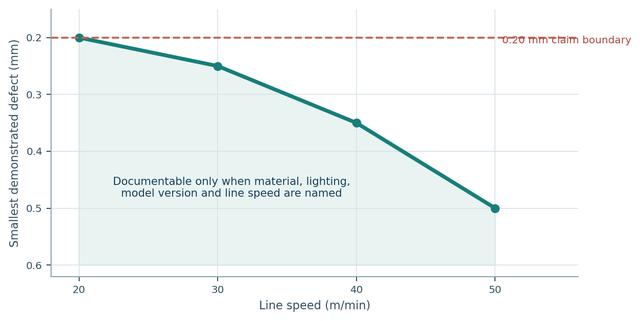
Industrial Automation | Preparing product literature for an AI-enabled machine-vision inspection module | Which accuracy, lighting, defect-detection and integration statements can be supported across the brochure, website and application note? |
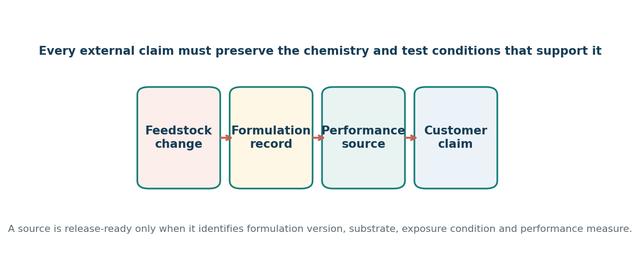
Specialty Chemicals | Rebuilding a corrosion-inhibitor documentation suite after feedstock reformulation | Which performance claims remain transferable, and where must concentration, metallurgy, temperature and water-chemistry conditions be restored? |
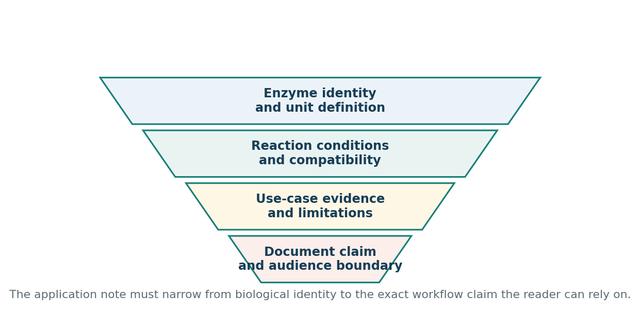
Biotechnology | Developing an application note for a recombinant nuclease used in mRNA process development | How should activity, impurity, process-stage and scale claims be translated from internal studies into defensible customer guidance? |
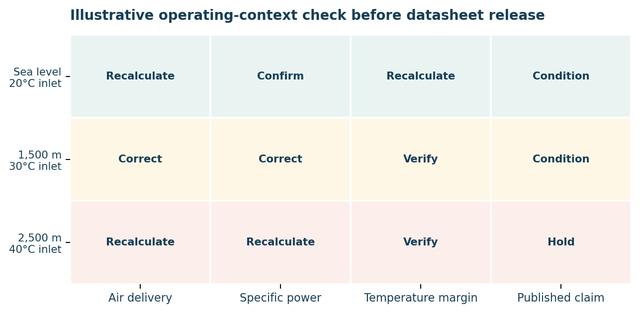
Commercial Equipment | Reconciling an oil-free centrifugal compressor datasheet across operating environments | Which efficiency, flow, pressure, turndown and ambient-condition figures belong in the released specification, and which require qualification? |
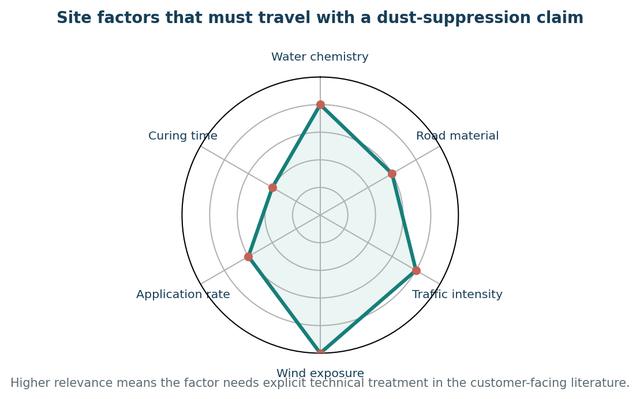
Mining + Raw Materials | Creating technical literature for a dust-suppression additive used across contrasting mine conditions | How should dosage, water quality, temperature, haul-road material and persistence evidence be presented without implying universal performance? |
Website treatment: display these as five floating placecards. Each card should show the industry, engagement title and one-line decision preview. Selecting a card opens its separate Phase 2 page.
Frequently asked questions
Is this a proofreading service?
No. Readability is reviewed, but the central task is to test whether technical statements are accurate, supported, qualified and useful.
Can August Research create a document from scattered source material?
Yes. We can structure and draft content from approved files while identifying missing evidence and questions for technical owners.
Does the service replace regulatory or engineering approval?
No. Formal regulatory, legal, quality and engineering approvals remain with authorised client functions.
How long can an engagement take?
A focused document may take 3 to 5 weeks. A connected, multilingual or multi-document review may take 6 to 10 weeks, depending on complexity and review cycles.
LET'S DISCUSS YOUR PROJECT
If technical information is fragmented or inconsistent, August Research can establish what is supportable and develop release-ready content. Review a technical document | Discuss a documentation programme