MARKET & BUSINESS INTELLIGENCE
Executive Interviews
Understand how leaders frame, fund, govern and change a business decision.
SERVICE ROLE
Leadership decision insight
PRIMARY METHOD
Moderated senior interviews
BEST USED WHEN
The decision logic is unclear
What this service does
Executive Interviews help clients understand the reasoning behind senior-level choices, not simply collect leadership opinions. August Research examines how executives define the issue, which evidence they trust, where authority sits, what creates hesitation, and what would move the decision forward.
When it is useful
A market is moving
Understand how leadership priorities and investment thresholds are changing.
A proposition is unproven
Test whether the value story fits executive language, governance and budget logic.
A decision keeps stalling
Identify the hidden constraints, unresolved evidence and internal hand-offs behind delay.
Questions the research can answer
- Which outcomes are senior leaders genuinely trying to improve?
- How do strategy, budget, governance and risk shape the final choice?
- Which proof points create confidence, and which claims are discounted?
- Where do executive views converge, and where do priorities conflict?
- What event, evidence or threshold could change the decision?
A DISTINCT RESEARCH ROLE
Leadership logic, reconstructed
The service is designed for decisions whose context cannot be understood from published sources, survey averages or a single internal viewpoint.
What makes an executive interview different
Executive Interviews
Industry Expert Interviews
Customer Interviews
Industry Surveys
Leadership intent, investment logic, governance and decision thresholds
Technical, operational or market knowledge held by specialists
Customer needs, experience, use and value perception
Directional patterns across a defined respondent population
Why use an independent research company
Executives may soften criticism, defend an existing programme or adapt their language when the study is run by a supplier, colleague or internal sponsor. A neutral interviewer creates useful distance while preserving the context needed for a commercially relevant discussion.
More candid discussion
An independent moderator can explore hesitation, trade-offs and failed assumptions without exposing internal reporting lines.
Comparable conversations
Role-specific guides keep the core decision questions consistent across companies, functions and geographies.
Less confirmation bias
The research design tests alternative explanations and actively searches for evidence that challenges the client brief.
Protected relationships
Recruitment, scheduling, consent and anonymisation can be managed without placing the client in every interaction.
Who may participate
The executive constituency is built around the decision. It may include CXOs, business-unit leaders, functional heads, procurement leaders, product leaders, innovation leaders, operations leaders and relevant ecosystem decision makers. Titles alone do not determine inclusion; the participant must influence, fund, govern or implement the decision being studied.
Recruitment is subject to availability, consent, conflict checks and the study's geographic and sector requirements.
DISTINCTIVE METHODOLOGY
Executive Decision Reconstruction
A structured process that connects what leaders say to the decision conditions around them.
1
Frame the decision
Define the choice, the sponsor's assumptions, the decision horizon and the evidence already available.
2
Build the constituency
Map who sets direction, owns budget, governs risk, implements change and influences acceptance.
3
Prepare the evidence primer
Review company, market, regulatory and investment evidence so interviews begin beyond the obvious questions.
4
Run adaptive conversations
Use a common spine with role-specific probes, examples and counterfactual questions.
5
Code the decision causes
Separate strategic intent, resource commitment, governance, risk and timing signals.
6
Reconstruct the context
Show consensus, friction, thresholds and evidence gaps, then translate them into actions.
Interview design principles
Common spine
Every interview covers the same core decision dimensions.
Role-specific depth
Questions change according to authority, incentives and operating context.
Counterfactual probes
Participants are asked what evidence or event would alter their position.
ANALYSIS FRAMEWORK
Five lenses on one decision
Interview evidence is interpreted through the forces that determine whether an executive decision moves, changes or stops.
STRATEGY
RESOURCES
GOVERNANCE
RISK
TRIGGER
Priority
Business outcome
Time horizon
Budget
Capability
Ownership
Authority
Approval
Accountability
Exposure
Uncertainty
Reversibility
Event
Evidence
Threshold
The framework prevents attractive quotations from being mistaken for a decision. It shows why a view is held, who can act on it and what needs to change.
From interview evidence to decision insight
01 SIGNAL
What was said, with context and confidence
02 CAUSE
The strategic, organisational or market reason
03 CONDITION
The proof, event or threshold that matters
04 IMPLICATION
What the client should test, change or monitor
Quality controls
- A recruitment screener tied to decision involvement, not title alone
- Consistent definitions and a shared evidence cut-off across interviews
- Separation of direct evidence, interpretation and untested hypothesis
- Anonymised synthesis unless attribution is explicitly agreed
- A contradiction log that records minority views and unresolved questions
What this research does not claim
Executive Interviews are qualitative and directional. They do not provide statistical representation, disclose confidential or material non-public information, confirm market size, replace legal or investment advice, or establish a decision on behalf of the client.
CLIENT OUTPUTS
Evidence the decision team can use
The final package is built for a working session, not a transcript archive.
Decision Context Map
A concise view of the choice, actors, pressures and dependencies shaping the decision.
Executive Constituency Map
Who sets direction, funds, governs, implements and influences the outcome.
Consensus and Friction Grid
Where executive views align, where they conflict and why the difference matters.
Trigger and Threshold Register
The evidence, event or operating condition that could move each decision position.
Strategic Signal Register
Signals to act on now, validate next or monitor over time, with source context.
Decision Briefing
A leadership-ready synthesis of implications, open questions and recommended next research actions.
Why August Research
100+
information sources and research channels across the wider August Research ecosystem
1,500+
established expert network, with recruitment matched to the study brief
GLOBAL
role-specific research across relevant industries and geographies
Source support may include company filings and investor material; S&P Capital IQ, PitchBook, Bloomberg, Refinitiv and FactSet; market and industry databases; trade and government sources; and targeted primary research. The final source mix is selected for the decision rather than applied as a fixed database bundle.
Engagement options
FOCUSED
One decision, a defined executive constituency and a targeted interview programme
COMPARATIVE
Multiple roles, organisations or markets examined through a shared decision framework
TRACKING
Repeat conversations around a market event, investment cycle or evolving adoption barrier
Scope, interview count, geographies and timing are agreed after participant feasibility and conflict checks. No fixed sample size should be implied before the decision and executive constituency are defined.
EXAMPLE APPLICATIONS
Where Executive Interviews Can Be Applied
Executive Interviews can support strategic decisions across industries and operating contexts.
1
Industrial services
How executives would assess a move from equipment sales to contracted uptime outcomes.
2
Hospital operations
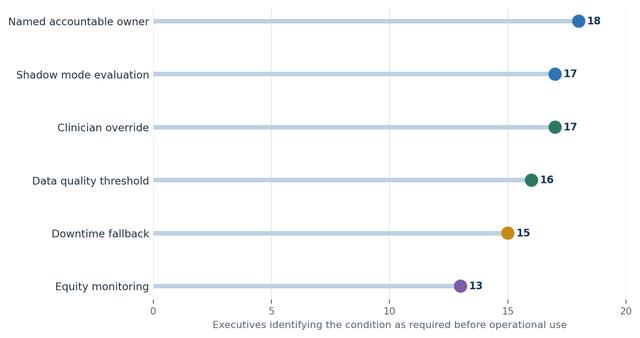
Which governance and evidence thresholds would shape adoption of AI-assisted operating-room scheduling.
3
Retail supply networks
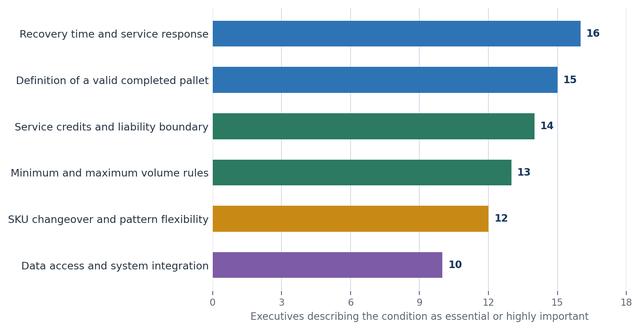
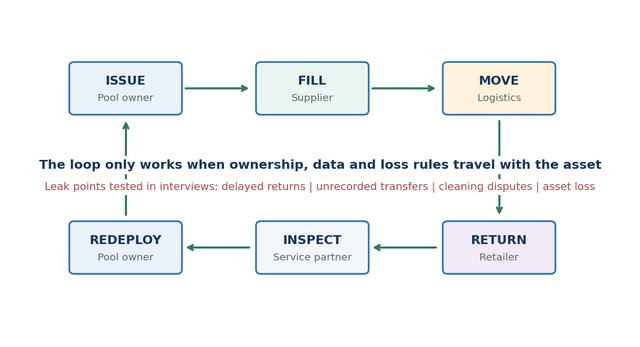
What would make reusable transport packaging acceptable across retailer and supplier leadership teams.
4
Mining operations
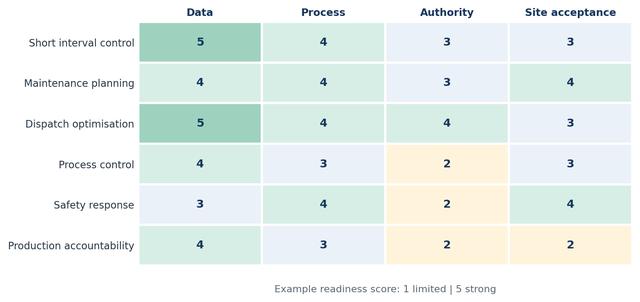
How mid-tier mining executives would frame investment in remote operations centres.
5
Specialty chemicals
What would influence distributors to add bio-based performance additives to their portfolios.
FAQ
Selection is based on decision involvement, role relevance, sector context, geography, availability and conflict checks. Seniority alone is not enough.
The disclosure approach is agreed for each study. Blind, partially disclosed and named formats may be used where appropriate and ethical.
The default output is anonymised synthesis. Named attribution requires explicit participant agreement and a suitable study design.
Executive interviews explain reasoning, trade-offs and decision conditions. Surveys are better suited to estimating patterns across a defined sample.
Contact Us
Discuss your executive interview requirement
Tell us the decision you need to understand, the executive roles you want to reach, and the markets or geographies in scope. August Research will help shape a focused research programme.