AUGUST RESEARCH
Consumer Behaviour Analysis
Understand what consumers do, where behaviour changes and which conditions a business can influence.
Consumer behaviour is rarely explained by an opinion alone. August Research combines public consumer signals with primary fieldwork to examine real actions, routines, workarounds, interruptions and outcomes across physical and digital settings.
BEHAVIOUR SETTINGS
HOME
Use, storage, preparation and disposal
STORE
Search, comparison and purchase
MALL
Movement, dwell, entry and abandonment
DIGITAL
Search, reviews, switching and checkout
ON THE GO
Context, companions and immediate choices
When this service is useful
A behaviour is assumed, not observed
The team knows the intended journey but not what consumers actually do.
Online signals are growing
Reviews and discussions reveal recurring actions that need structured investigation.
Context may be changing the outcome
Location, companions, time, climate or channel may alter the same decision.
A specific action must change
Product, packaging, retail, communication or support teams need a practical intervention.
BEHAVIOUR FRAME
Examine the action, not only the consumer statement
The study starts with one observable behaviour and the conditions surrounding it.
TRIGGER
What happened immediately before the action?
CONTEXT
Where, when and with whom did it occur?
ACTION
What did the consumer actually do?
INFLUENCE
What information, person or constraint changed it?
OUTCOME
Was the action completed, repeated, adapted or abandoned?
Questions the research can answer
01
Which occasions trigger purchase, use, switching, avoidance or repeat behaviour?
02
Where do consumers depart from instructions, planned journeys or stated preferences?
03
Which physical, social, digital or environmental conditions alter the action?
04
What information is noticed, ignored, misunderstood or sought elsewhere?
05
Which workarounds solve the immediate problem but create a later cost or risk?
06
Which behaviour can the client influence through product, packaging, retail, communication or support?
Clear service boundary
Customer Interviews
Explain a recent customer choice or outcome through a structured conversation.
Voice of Customer Research
Collect and resolve customer opinion around a defined company decision.
Consumer Behaviour Analysis
Observe or capture actions in context and connect them with public behaviour signals.
SECONDARY BEHAVIOUR SIGNALS
Use public consumer content to locate behaviours worth investigating
The secondary component identifies language, occasions, workarounds and emerging patterns before fieldwork is designed.
Public Behaviour Signal Scan
E COMMERCE
Product reviews, ratings, questions and seller responses
VIDEO
Demonstrations, comments, comparison and troubleshooting content
COMMUNITIES
Reddit, Quora, specialist forums and public discussions
APP STORES
Usage interruptions, feature workarounds and update reactions
RETAILER Q&A
Questions asked before and after purchase
SOCIAL CONTENT
Public posts describing routines, occasions and informal advice
COMPARISON CONTENT
Alternatives considered, attribute trade offs and switching language
CLIENT EVIDENCE
Approved reviews, support themes or behavioural records supplied for the study
What is captured from each relevant signal
ACTION
Used, compared, avoided or changed
OCCASION
Time, place and purpose
TRIGGER
Event that started the behaviour
WORKAROUND
Alternative step or informal solution
OUTCOME
Completed, repeated, switched or abandoned
CONTEXT
Market, platform, date and product version
How the evidence is treated
SIGNAL
Reviews and discussions identify behaviours and questions. They do not establish population prevalence.
SEPARATION
Platforms, markets, product versions and time periods remain visible instead of being merged into one average.
PERMISSION
Collection routes, permitted use, privacy and reporting treatment are confirmed for each platform and study.
VALIDATION
Primary research tests whether the behaviour appears in the selected consumer contexts and why it occurs.
PRIMARY FIELDWORK
Select the method according to the behaviour and setting
Interviews support interpretation, but the primary design begins with behaviour captured close to the event.
METHOD | BEST USED WHEN | EVIDENCE CAPTURED |
|---|---|---|
Mobile behaviour diary | The action repeats across days or occasions. | Time stamped entries, photos, short videos and immediate explanations. |
Context observation | The environment or other people influence the action. | Sequence, handling, interruptions, adaptations and unused features. |
Shop or mall accompaniment | Navigation and physical comparison shape choice. | Route, dwell, entry, search, interaction, purchase and abandonment. |
Digital shopping capture | Search, reviews, filters or checkout shape behaviour. | Screen path, comparison set, information use and exit point. |
Event triggered pulse | The behaviour follows a purchase, failure, switch or cancellation. | Immediate action, confidence, alternative considered and next step. |
Receipt or artefact capture | Claimed behaviour needs a supporting trace. | Receipts, screenshots, product placement, storage or preparation evidence. |
What outreach looks like
1 FRAME
Define the behaviour and contexts
2 ROUTE
Choose panel, direct or site access
3 SCREEN
Verify event, setting and eligibility
4 CONSENT
Explain capture, privacy and burden
5 PREPARE
Issue task, stimulus or field instructions
6 CAPTURE
Observe or record the behaviour
7 CLARIFY
Follow contradictions and close participation
Participant selection can combine geography, climate, household structure, life stage, ownership period, channel, usage intensity, recent success or failure, service proximity and competitor use. The parameters are selected for the behaviour, not applied as a fixed demographic template.
PHYSICAL SHOPPING BEHAVIOUR
Understand the complete shopping mall visit
Mall research connects destination choice, movement, store entry and commercial action instead of studying one store in isolation.
The mall behaviour path
CHOOSE
Select mall, day and visit purpose
ARRIVE
Travel, park and choose entrance
MOVE
Navigate floors, anchors and common areas
ENTER
Notice and enter or bypass stores
ACT
Compare, queue, purchase or abandon
RETURN
Recall, recommend and decide to revisit
Field methods inside the mall
Entry and exit intercept
Compare intended activities with completed stores, purchases and reasons for leaving.
Accompanied shopping
Observe route changes, store entry, comparison, companion influence and interruption.
Structured zone observation
Measure defined events such as dwell, queue abandonment, directory use and promotion interaction.
Visit path diary
Let participants record stores, common areas, decisions and changes during the visit.
Receipt and purchase capture
Connect category, store, value and unplanned purchases with the route taken.
Post visit explanation
Clarify why a route changed or why a noticed store did not lead to entry or purchase.
Parameters selected for the site
01
Mall type, city tier, catchment and distance travelled
02
Weekday, weekend, time of day, festival or sale period
03
Entrance, floor, anchor proximity and staffed or unstaffed zones
04
Solo, family, couple or group visit
05
Planned, recreational or mixed purpose visit
06
First time, occasional or frequent visitor
Site permission, participant consent and clearly defined observation zones are built into the field plan. Identifiable individuals are not covertly tracked or recorded.
CONSUMER BEHAVIOUR CONTEXT SYSTEM
Connect public signals with behaviour captured in real settings
The system does not force every project through the same field technique. It creates one comparable evidence record around the behaviour in scope.
01 Set the behaviour boundary
Define the action, participant, setting, trigger, timeframe, geography and decision the client must make.
02 Locate public signals
Identify recurring actions, workarounds, occasions and contradictions across permitted consumer content.
03 Build the context sample
Select consumers and field settings according to the conditions most likely to change the behaviour.
04 Capture the action
Use the lightest suitable combination of diary, observation, accompaniment, event pulse or artefact evidence.
05 Resolve the conditions
Compare public signals, captured behaviour and participant explanation to identify what is stable, conditional or unresolved.
06 Translate into action
Assign supported changes to product, packaging, retail, communication, service or further validation.
Analysis lenses
ROUTINE
Repeated sequence and default action
FRICTION
Delay, effort, uncertainty and abandonment
ADAPTATION
Workaround and informal learning
INFLUENCE
People, information, place and timing
CONDITION
Where the behaviour changes or stops
DECISION DELIVERY
Turn behaviour evidence into actions different teams can use
Outputs retain the setting and conditions behind each conclusion instead of reducing the study to generic consumer themes.
What clients receive
Behaviour Evidence Database
An Excel evidence file containing coded public signals, primary observations, participant context, evidence type and quality notes.
Context and Occasion Map
A visual account of when, where and under which conditions the behaviour appears, changes or disappears.
Behaviour Opportunity Register
Supported interventions, affected consumer groups, owners, dependencies and unanswered questions.
Decision Briefing
A PowerPoint readout covering patterns, exceptions, field evidence, recommended actions and the next validation step.
Why use independent external research
REDUCE INTERNAL ASSUMPTIONS
Observe behaviour without defending the intended journey or current product design.
REACH BEYOND CUSTOMERS
Include category users, competitor users, abandoners and non buyers where relevant.
PROTECT CANDOUR
Let consumers disclose misuse, workarounds and confusion through a neutral research route.
COMPARE CONTEXTS
Apply one evidence frame across markets, occasions and field settings.
Why August Research
100+ INFORMATION CHANNELS
Company, market, industry and public consumer information channels available across the wider research ecosystem.
8 INDUSTRY GROUPS
Sector context used to define consumer settings, terminology, stimuli and behavioural conditions.
MULTIPLE ACCESS ROUTES
Client contacts, targeted recruitment, consumer panels, communities, site intercepts and market partners.
Engagement formats
SIGNAL SCAN
Focused secondary review of one behaviour and market.
FIELD STUDY
Primary capture in one defined consumer setting.
HYBRID STUDY
Secondary signals plus context specific fieldwork.
MULTI MARKET
Comparable evidence across selected countries or settings.
ILLUSTRATIONS
Consumer Behaviour Analysis illustrations
Each illustration would use a different field method, participant design, analysis structure and visual output.
SETTING | BUSINESS QUESTION | PRIMARY ROUTE | DECISION VIEW |
|---|---|---|---|
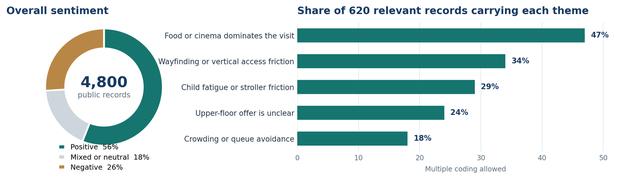
Regional shopping mall | Why do weekend family groups bypass upper floor specialty stores after entering the mall? | Accompanied visits, entry and exit intercepts, route diaries | Floor movement and store entry map |
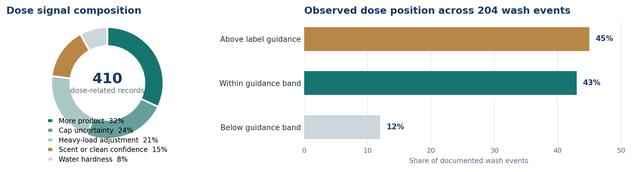
Concentrated laundry detergent | When and why do households exceed the intended dose despite reading the pack? | Mobile wash diary, dose photo capture, context follow up | Dose decision condition map |
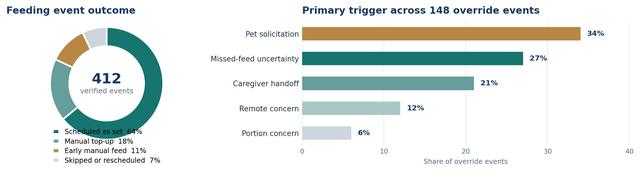
Smart pet feeder | What causes owners to override scheduled feeding and return to manual routines? | In home event capture, caregiver comparison, incident follow up | Automation trust and override pattern |
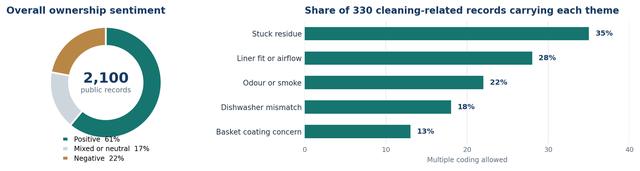
Air fryer ownership | Which cleaning and liner workarounds reduce use or create repeated cooking problems? | Usage diary, kitchen observation, photo evidence | Use, cleaning and workaround loop |
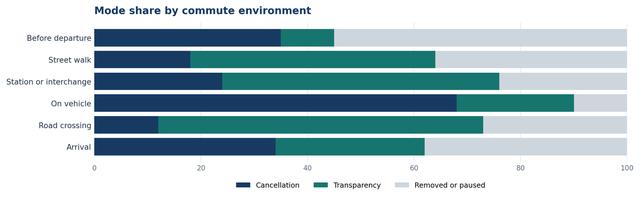
Noise cancelling headphones | When do commuters switch between cancellation, transparency and removal during a journey? | Commute triggered pulses, route observation, mode diary | Environment by mode switching map |
FAQ
No. Public content is used to locate behavioural signals. Primary fieldwork then examines the action and its context.
No. The method depends on the behaviour, sensitivity, setting, access and burden. Diaries, event pulses or artefact capture may be more appropriate.
Yes. With the required site permissions, the study can examine arrival, movement, store entry, comparison, purchase and abandonment.
Not by themselves. They are treated as directional evidence unless a suitable quantitative design establishes incidence within a defined population.
Contact Us
Discuss your consumer behaviour question
Tell us the behaviour, consumer group, setting, markets, available evidence and business decision. August Research will design the secondary scan, fieldwork route and decision view around the conditions that matter.