R&D & INNOVATION / PRIMARY RESEARCH
Intended-Use Validation
Independent evidence that a near-final product, technology or workflow can be used successfully by the people it is designed for, before release, handover or wider deployment.
THE DECISION
Release, release with conditions, remediate or defer, based on evidence gathered from intended users completing agreed tasks in the intended setting.
A product can function technically and still fail in use. The wrong person may receive the alert. A routine task may depend on an undocumented workaround. A handover may break between two roles. Intended-Use Validation makes those conditions visible before the organisation treats the product as ready.

What This Service Validates
The scope is built around four linked conditions. A positive reaction is not enough. Each condition must be defined clearly enough to observe and judge.
Condition | What is defined | What the study examines |
|---|---|---|
INTENDED USER | The role, experience, access needs and decision authority expected in real use. | Whether the selected people genuinely represent the users who must act. |
CRITICAL TASK | The task, expected outcome, sequence and material failure point. | Whether the user can complete, recover or escalate without hidden support. |
USE SETTING | The physical, digital, organisational and social conditions around use. | Whether noise, time pressure, handovers, devices or local practice change the result. |
ACCEPTANCE RULE | The observable condition that must be met and the consequence if it is not. | Whether evidence supports acceptance, conditional release, remediation or deferral. |
Where Intended-Use Validation Creates Value
- Release confidence The technical build is close to complete, but the team lacks independent evidence that intended users can complete the work.
- Workflow reality Success depends on handovers between users, administrators, installers, support teams, buyers or operational owners.
- Exception handling The normal task appears straightforward, while recovery, escalation or edge cases could undermine adoption or safety.
- Acceptance governance Different stakeholders are using different definitions of ready and need one evidence-led decision boundary.
- Regulatory or assurance pressure A future submission, audit or market obligation makes intended users, tasks and environments important to document. Formal regulatory conclusions remain with qualified responsible parties.
The August Research Acceptance Architecture
Before participant sessions begin, the project team agrees what acceptance means. This prevents the criteria from moving after the results are known.
Acceptance item | Required evidence | Exception rule | Decision consequence |
|---|---|---|---|
Task completion | Observed completion of the defined outcome without prohibited assistance. | Record use error, workaround, recovery and facilitator intervention. | Accept, remediate or retest the task. |
Understanding | User explains the action, status or result in their own words. | Separate a wording issue from a training or workflow dependency. | Revise communication, training or scope. |
Operational fit | The task survives the intended device, setting, time pressure and handover. | Identify conditions that invalidate the result or narrow applicability. | Release with conditions, redesign or defer. |
Participant Selection: Intended-Use Proximity
Recruitment is not based on convenience or a generic demographic quota. The participant mix is built around who carries the task and its consequences.
- Role fidelity Participants hold the same responsibility, access or decision rights expected after release.
- Task familiarity The mix reflects novice, routine and experienced users where those differences change performance.
- Environment equivalence Participants are selected for the equipment, channel, location or operating constraints relevant to the study.
- Failure-point exposure Some participants have practical experience of exceptions, recovery, support or escalation.
- Independence Participants are screened to reduce coaching, internal advocacy or commercial influence over the result.
- Inclusion requirements Accessibility, language, physical capability and digital confidence are included where they form part of intended use.
Who May Need to Be Included
Not every project needs every group. The field is selected around the complete use pathway and the release decision.
B2C AND PUBLIC-FACING USE
B2B AND OPERATIONAL USE
- Consumers and end users
- Caregivers or household decision-makers
- People with differing access needs
- Customer-support and service users
- Administrators where they control access
- Frontline operators and technicians
- Installers and implementation teams
- Buyers, procurement and operational owners
- Supervisors, administrators and support roles
- Channel partners or suppliers where they perform part of the workflow
How Evidence Is Gathered
- Observed task sessions Participants complete pre-agreed scenarios on site, remotely or in an appropriately realistic setting. Facilitation is controlled so assistance does not hide a failure.
- Structured forms or scorecards Physical or online forms capture comparable responses on clarity, confidence, effort and readiness immediately after each task.
- Follow-up interviews Interviews explain why the task succeeded, failed or required a workaround and test whether the result is repeatable.
- Available operational evidence System logs, completion records, support data or workflow artefacts can be incorporated when they are available and appropriate.
- Data triangulation Observed behaviour, structured responses, interviews and cross-role evidence are compared before a finding is treated as an acceptance issue.
Delivery Can Be Configured Around the Use Setting
Sessions may be conducted in person, remotely, in the workplace, at a customer site or in a controlled simulated-use setting. August Research does not claim to own laboratories, factories or manufacturing centres. Where specialist facilities or equipment are needed, suitable external providers are scouted against the project requirement.
What the Client Receives
- Acceptance Protocol The agreed users, tasks, settings, evidence rules, assistance boundary and decision logic before fieldwork begins.
- Participant Rationale A transparent record of why each participant group is relevant to the intended-use pathway.
- Task-Level Evidence Ledger A structured record of completion, errors, workarounds, recovery, confidence and supporting qualitative evidence.
- Exception and Remediation Register Issues classified by consequence, affected users, likely cause, owner and the evidence required to close them.
- Release Decision Brief A clear recommendation to accept, accept with conditions, remediate or defer, with the conditions attached to each decision.
- Retest Plan Where needed, a focused plan for the tasks, groups and conditions that must be tested again before the decision changes.
The Validation Boundary
Question | Included here | Handled separately |
|---|---|---|
Can intended users complete the agreed task? | Observed intended-use evidence. | Prototype exploration where the design question is still open. |
Does the product meet technical specifications? | Only where a specification is observable through use. | Engineering verification, laboratory or performance testing. |
Is the product compliant or certified? | Evidence can be structured for later review. | Legal advice, conformity assessment, certification and regulated accountability. |
Will the whole market adopt it? | Evidence from selected intended users and contexts. | Market sizing, demand forecasting and population-level claims. |
Is a clinical outcome proven? | User interaction and workflow evidence where appropriate. | Clinical validation, safety conclusions and formal clinical responsibilities. |
Why August Research
Independent Acceptance Evidence, Built Before the Test
August Research treats acceptance as an evidence architecture, not a final workshop or a satisfaction score. The acceptance rules are agreed before sessions begin, participants are recruited for intended-use proximity, and each decision is traceable to observed tasks, structured responses and interviews.
- Criteria stability Acceptance conditions are set in advance, so a difficult result cannot be explained away by changing the definition of success.
- Role-by-role recruitment The field reflects the people who perform, receive, support or govern the intended use, rather than one undifferentiated user panel.
- Evidence triangulation Task performance, physical or online forms, interviews and operational evidence are compared before a finding changes the release decision.
- Decision traceability Every exception is connected to an affected task, user group, consequence, owner and closure requirement.
- Independent challenge The work creates distance between internal enthusiasm and the evidence required to release responsibly.
Frequently Asked Questions
How late in development should this be used?
When the product, workflow or system is stable enough for defined tasks and acceptance criteria. If fundamental design questions remain open, Prototype Feedback Studies is usually the better starting point.
Is this only for software?
No. It can be used for physical products, connected devices, digital tools, industrial systems, service workflows and combinations of these.
Does every task receive a simple pass or fail?
Not necessarily. The protocol can support acceptance, conditional acceptance, remediation or deferral, provided each outcome has a defined consequence.
Can client employees participate?
Yes, where they are the intended operators or administrators. Independent external participants may also be included when customer, consumer or channel evidence is needed.
Can the study support a regulated development programme?
It can produce structured intended-use evidence and a clear assumptions record. Formal regulatory strategy, submissions, certifications and accountable sign-off remain with qualified responsible parties.
How long might a project take?
A focused engagement may take approximately 4 to 8 weeks. The actual timeline depends on scope, participant availability, use setting, materials, access and response time.
Frequently Combined With
- Prototype Feedback Studies
- Product Testing & Validation
- Clinical & Industrial Expert Validation
- Field Validation Studies
- Technical Expert Panels
Illustrative Engagements
Each panel below would open as a separate Phase 2 illustrative page. These are hypothetical research scenarios, not client case studies.
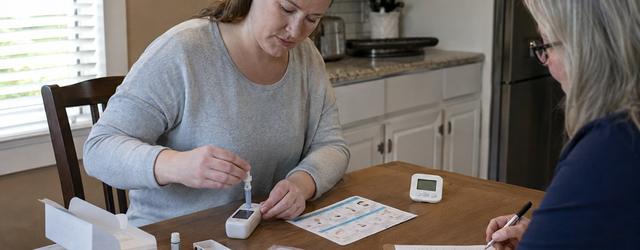
Regulatory-led: can intended lay users complete the sample, read the result and take the correct next action under the labelled conditions?
Can buyers, suppliers and administrators complete a near-final onboarding workflow without hidden support or approval failure?
Can operators complete routine picks, handle exceptions and hand over work using the release candidate in the intended operating environment?
Can household users install, interpret and respond to alerts correctly before a wider consumer rollout?
Let's Discuss Your Release Decision
If a product is close to release but acceptance still depends on real people completing real work, August Research can define the evidence boundary, recruit the right participants and produce a decision-ready validation record.
Research Basis
Sources reviewed in framing: NIST, Common Industry Specification for Usability Requirements and Usability Testing; FDA, Human Factors Considerations and Applying Human Factors and Usability Engineering to Medical Devices; UK Government Service Manual, Writing User Stories and Quality Assurance: Testing Your Service Regularly; Atlassian Support, User Acceptance Testing for Migrations. Accessed August 2026.