AUGUST RESEARCH
Field Validation Studies
Decision-ready evidence from real operating environments
The core question
Does the product work reliably enough in the setting, workflow and hands of the people it is designed for, or does the team need to remediate, retest, release conditionally or defer?
A field study is not a lab test moved outdoors
Field Validation Studies examine a product in a representative operating environment. They are designed for decisions that depend on real users, site conditions, handovers, routine workarounds and the exceptions that a controlled setting may not reveal.
August Research defines the decision and the field-equivalence requirements first, then coordinates the appropriate external settings, participants and evidence collection route. We do not own testing facilities or sites; suitable providers and environments are scoped for each engagement.
The distinction
Field Validation assesses deployment-system fit: whether the product can operate successfully within the real-world workflow around it. It is not a broad prototype-feedback exercise, a defined task-acceptance study, or a durability programme.
When this service creates value
The decision | What field evidence can clarify |
|---|---|
Pilot, expand or pause | Whether the product supports the intended workflow under representative conditions. |
Release as designed or remediate | Where behaviour, environment or handovers introduce a material performance risk. |
Make a supplier or design change | Whether the issue is product-specific, process-specific or caused by site conditions. |
Define controlled rollout terms | Which users, locations, training or monitoring conditions should be in place at launch. |
Best suited for
- B2B equipment, connected products or technical systems that interact with a defined workplace or service workflow.
- B2C products where in-home, retail, mobility or service-context behaviour can affect practical performance.
- Products moving from prototype or controlled verification into pilots, early deployment or regional rollout.
- Teams that need more than stated preference: observed use, structured responses, interviews and available operational records.
The August Research Operating Reality Validation Loop
The study is built around a decision and an evidence boundary, not a generic fieldwork exercise. Each phase creates a specific input to the final decision pack.
1 | Frame the decision
Agree the release, remediation or deployment decision; define success conditions, known risks and what evidence would change the decision.
2 | Build field equivalence
Specify the user roles, site characteristics, workflow steps, handovers and exception conditions that make a setting representative.
3 | Coordinate the study route
Scout and assess external sites, service partners or participant channels; align permissions, instructions, logistics and data capture.
4 | Capture behaviour in context
Combine observation, task records, structured forms, short interviews and relevant operational records without treating any one source as conclusive.
5 | Triangulate and decide
Trace patterns across evidence sources, identify evidence gaps and translate findings into a release, remediation or next-study recommendation.
Typical evidence design
Evidence stream | Purpose in the study |
|---|---|
Observed tasks and workflow notes | Shows what participants actually do, including workarounds and interruptions. |
Structured online or paper forms | Creates a comparable record of task completion, friction points and use conditions. |
Short interviews | Explains why a behaviour occurred and whether a problem is likely to recur. |
Device, service or operational records | Adds available context on events, duration, environment or support demand. |
Field engineer or site-partner observations | Tests whether the finding is visible beyond one participant or one occasion. |
Triangulation principle
No single observation, form response or interview is presented as a universal result. The final interpretation looks for convergence, contradictions and remaining uncertainty across sources.
What you receive
- A field-validation plan defining roles, environments, critical tasks, evidence sources and acceptance rules.
- A coordinated site, provider or participant route aligned to the project requirement.
- An evidence ledger showing observed patterns, exceptions, confidence and decision relevance.
- A decision-ready recommendation: proceed, proceed with conditions, remediate and retest, or defer.
Why August Research
Field validation often fails when the study setting is merely convenient, the evidence is collected without a decision rule, or field anecdotes are mistaken for a robust pattern. August Research is structured to avoid those traps.
August Research discipline | Why it matters |
|---|---|
Field-equivalence design | We translate the intended setting into concrete role, workflow, environment and exception criteria before the study starts. |
Decision-first coordination | Every capture method is linked to a release, remediation, deployment or follow-on research decision. |
Independent external route | We identify and assess appropriate external sites, participants and specialist partners based on the scope. Our database evolves as new routes become relevant. |
Evidence triangulation | Observed behaviour, structured responses, interviews and available records are reviewed together, including where they disagree. |
Clear evidence boundaries | The output distinguishes a practical field decision from certification, regulatory approval or universal performance claims. |
Scope and evidence boundary
This service produces structured, decision-ready primary research. It does not replace accredited testing, formal conformity assessment, clinical investigation, regulatory interpretation or a customer’s own quality-system responsibilities. Where these are required, qualified external providers and responsible parties retain those roles.
Frequently asked questions
How is this different from Prototype Feedback Studies? Prototype Feedback is exploratory: it uses open stakeholder input to identify what should change before a design is committed. Field Validation is later-stage and asks whether a more stable product can operate within a real deployment system.
How is this different from Intended-Use Validation? Intended-Use Validation confirms whether intended users can complete defined tasks under pre-agreed acceptance rules. Field Validation asks the wider deployment question: whether site conditions, multi-role handovers, exception pathways, local processes and operational constraints support successful use at scale.
How is this different from Reliability & Durability Assessment? Reliability & Durability Assessment tests whether product or component performance remains acceptable through repeated use, ageing and exposure. Field Validation investigates the operating system around the product, not its lifetime performance alone.
How is this different from Product Testing & Validation? Product Testing & Validation is centred on locating and coordinating controlled technical capability. Field Validation Studies examine deployment-system fit in representative operating conditions, where people, workflow and environment interact.
Does this apply to both B2B and B2C? Yes. Participants might include operators, technicians, buyers, installers, distributors, service teams, consumers, suppliers or vendors, depending on the decision and the real setting.
How long does a study take? An illustrative programme may take 4–10 weeks. Actual timing depends on provider and participant response, permissions, product readiness, seasonal conditions, logistics and the observation period needed.
Frequently combined with
- Prototype Feedback Studies
- Intended-Use Validation
- Product Testing & Validation
- Reliability & Durability Assessment
- Proof-of-Concept Evaluation
Illustrative engagements
Illustrative engagements are shown as separate, clickable examples at the bottom of this service page. They are hypothetical and do not represent client outcomes.
Field validation example | Decision focus |
|---|---|
Connected safety device in warehouse operations | Whether the device supports handovers, alerts and shift-based use before wider deployment. |
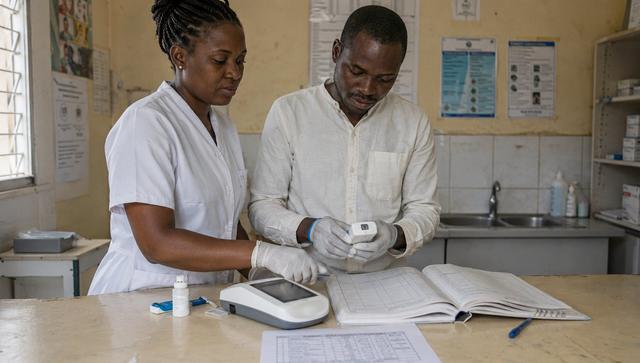
Portable diagnostic workflow across community clinics | Whether the product fits the actual operating environment, training level and exception pathway. |
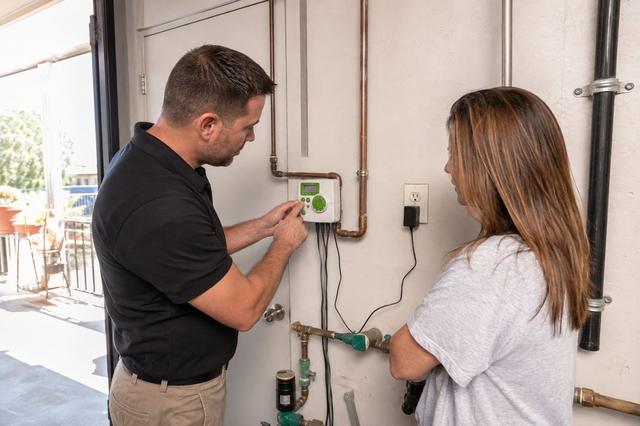
Consumer water-saving controller in occupied homes | Whether installation, routine use and environmental variability support a controlled launch. |
Industrial monitoring sensor at a live customer site | Whether the evidence supports a regional pilot, a design change or additional observation. |
Let’s Discuss Your Project
Tell us the product stage, intended operating environment, participant roles, critical workflow and the decision you need to make. We will shape a field-validation route around the evidence that decision actually requires.
Research basis: the approach is informed by established human-factors, usability and real-world performance principles. Specific requirements are tailored with the client and any selected external provider.