PRIMARY RESEARCH CAPABILITY
Reliability & Durability
Assessment
Independent evidence on how products perform through repeated use, ageing and real-world stress.
USE
Mission profile
STRESS
Cycles and exposures
DECIDE
Release or remediation
The decision this service supports
Whether a product, component or system is sufficiently robust for its intended service conditions, requires targeted engineering changes, or needs additional evidence before release, scale-up or procurement.
A Different Question from Product Testing
A product may meet its specification during a single test and still deteriorate after repeated operation, cleaning, transport, storage or environmental exposure. Reliability & Durability Assessment examines that change over time. The work is built around a realistic mission profile, known or plausible failure mechanisms, defined checkpoints and evidence-based acceptance rules.
Service | Central question | Typical evidence |
|---|---|---|
Product Testing & Validation | Does it meet a defined requirement now? | Measured performance against a specification |
Intended-Use Validation | Can intended users complete required tasks? | Observed task success, errors and recovery |
Reliability & Durability Assessment | Does performance remain acceptable through use and stress? | Degradation, failures, cycle data and interval measurements |
When Reliability Evidence Creates Value
- Before design freeze, when the team needs evidence on wear, fatigue or environmental vulnerability.
- Before launch or scale-up, when performance must be checked across repeated cycles rather than at a single point.
- After a material, component, supplier or manufacturing-process change.
- When returns, service records or field complaints indicate an emerging failure pattern.
- When a product will be reused, cleaned, transported, stored outdoors or exposed to variable operating conditions.
- When procurement, quality, regulatory or engineering stakeholders require an independent test record.
What Can Be Assessed
The programme is configured around the product and its intended operating environment. A project may use one stress family or a carefully sequenced combination.
Stress family | Examples of conditions | Evidence produced |
|---|---|---|
Repeated operation | Actuation, opening and closing, mating, dispensing, pumping, bending or switching cycles | Wear rate, drift, intermittent faults and cycle-to-failure observations |
Environment | Temperature, humidity, thermal cycling, UV, dust, water, salt or corrosive exposure | Performance before, during and after exposure; seal and material condition |
Transport and handling | Drop, shock, vibration, compression, stacking and package movement | Damage location, functional retention and packaging-product interaction |
Cleaning and chemicals | Washing, disinfection, detergents, oils, fuels or application-specific fluids | Surface, seal, dimensional and functional changes |
Energy and electronics | Battery cycling, charging, connector use, sensor drift and communication interruptions | Capacity retention, electrical stability, drift and fault recurrence |
The August Research Test Architecture
The programme follows the anticipated life of the product rather than treating each laboratory test as an isolated event. The sequence is designed so the evidence remains traceable to an engineering or release decision.
- Define the mission profile. Translate intended use into operating cycles, dwell times, loads, environmental exposures, cleaning events, storage and transport conditions.
- Map failure hypotheses. Identify credible wear mechanisms, interfaces, materials and functions that could deteriorate or fail.
- Set acceptance rules. Agree critical measurements, checkpoints, allowable drift, stop conditions and the decision to be made before testing begins.
- Select the evidence route. Determine which work needs an external laboratory, specialist rig, field setting, engineering inspection or combined sequence.
- Establish the baseline. Record initial performance, dimensions, images, software state and specimen condition.
- Run cycles and checkpoints. Apply controlled stress, pause at defined intervals and capture both quantitative change and observed failure behaviour.
- Investigate deterioration. Examine failed or degraded units with the appropriate engineering, materials or laboratory specialists.
- Make the decision. Classify the evidence as release-ready, conditionally acceptable, requiring remediation, or requiring further testing.
Facilities, Equipment and Processes We May Coordinate
August Research does not claim to own laboratories, factories or manufacturing centres. Suitable external providers are scouted and evaluated according to the product, test method, equipment range, applicable standards, specimen logistics and required evidence quality. We maintain an evolving database of laboratories, engineering organisations and specialist facilities, which changes and expands with project needs.
- Environmental chambers for temperature, humidity, thermal cycling and controlled ageing.
- Vibration, mechanical shock, drop, compression and transport-simulation systems.
- Ingress, dust, spray, immersion, corrosion, UV and weathering equipment.
- Purpose-built cycling rigs for connectors, hinges, actuators, pumps, latches and dispensing mechanisms.
- Battery cyclers, electrical-load systems, data acquisition and sensor-calibration equipment.
- Microscopy, dimensional metrology, surface analysis, leak testing and non-destructive inspection.
- Cleaning, disinfection, wash-cycle or chemical-exposure setups for reusable products.
How External Providers Are Selected
Provider selection is not based on equipment availability alone. August Research evaluates whether the facility can reproduce the relevant failure conditions and deliver evidence that is usable by the client’s engineering and quality teams.
Selection criterion | What August Research checks |
|---|---|
Failure-mode fit | The equipment and method can reproduce the stress mechanism relevant to the decision. |
Operating range | Load, temperature, humidity, frequency, flow, voltage or cycle capability covers the required profile. |
Method control | Calibration, traceability, specimen conditioning, data capture and deviation handling are appropriate. |
Sequence capability | The provider can support combined or staged exposures without losing specimen identity. |
Failure investigation | The team can document deterioration and, where required, support root-cause examination. |
Independence and confidentiality | Commercial conflicts, data handling and confidentiality requirements are checked. |
Logistics and responsiveness | Location, lead time, sample transport, customs and reporting cadence fit the programme. |
Who May Contribute
The core evidence normally comes from product specimens, controlled measurements and engineering review. Participants are included only where their role materially improves the assessment.
- Client design, reliability, quality, manufacturing and service engineers.
- Independent laboratory operators and test engineers selected for the required equipment and methods.
- Materials, electronics, battery, packaging, mechanical or failure-analysis specialists.
- Suppliers or contract manufacturers when a component or production variable must be understood.
- Field operators, installers or consumers when handling variability is part of the realistic mission profile.
- Regulatory or standards specialists when the evidence must align with a defined submission, compliance or procurement route.
Evidence Collection and Triangulation
A strong conclusion does not depend on a single end-point measurement. We combine controlled results with interval checks and contextual evidence so the team can see when deterioration began, how it progressed and whether it affected the intended function.
Evidence stream | Examples |
|---|---|
Instrumented data | Loads, temperatures, currents, pressures, dimensions, leak rates, capacity or sensor drift |
Specimen record | Images, condition grading, damage maps, serial-level history and chain of custody |
Operational record | Cycle count, dwell time, interruptions, deviations and maintenance events |
Human observation | Structured operator forms, technician notes and short interviews where use variability matters |
Engineering interpretation | Failure-mode review, cross-specimen comparison and targeted root-cause analysis |
What the Client Receives
Output | What it contains |
|---|---|
Decision-aligned evidence plan | Mission profile, failure hypotheses, acceptance criteria, sample logic and test sequence. |
Provider and facility assessment | A reasoned shortlist with capability, lead-time, method and coordination considerations. |
Test protocol and evidence matrix | Specimen IDs, conditions, checkpoints, measurements, stop rules and responsibilities. |
Progress and exception updates | Scheduled checkpoint summaries plus rapid notification of unexpected failures or deviations. |
Reliability and durability readout | Degradation curves, failure chronology, photographs, interval comparisons and evidence gaps. |
Decision register | Release, conditional release, remediation, supplier action, redesign or further-test recommendations. |
Technical evidence pack | Structured files suitable for internal engineering, quality, procurement or regulatory review. |
Project Delivery and Indicative Timing
Delivery can be managed as a single coordinated programme or through gated stages. A typical laboratory-led assessment may take approximately 6 to 14 weeks. Short targeted cycle tests may be completed sooner, while long-duration ageing, field exposure, custom-rig development or specialist failure analysis can extend the programme.
Delivery stage | Illustrative timing | Typical activity |
|---|---|---|
Scope and evidence design | 1–2 weeks | Mission profile, failure hypotheses, acceptance rules and sample plan |
Provider scouting and setup | 1–3 weeks | Capability confirmation, quotation, logistics, fixtures and protocol alignment |
Testing and checkpoints | 2–8+ weeks | Baseline, cycles, exposures, interval measurements and exception reporting |
Analysis and decision readout | 1–2 weeks | Failure review, evidence synthesis, recommendations and technical pack |
Timing note
These ranges are illustrative. Primary research and external testing timelines remain dependent on provider availability, equipment scheduling, custom-fixture requirements, specimen readiness, cycle duration, shipping and the response time of participating organisations.
Scope and Evidence Boundary
The service produces decision-ready reliability and durability evidence within the agreed test design. It does not automatically create a universal lifetime claim, product certification or regulatory approval. A statistical reliability claim requires an appropriate sample design, failure definition, censoring treatment and confidence method. Formal certification must be performed by the relevant authorised or accredited body where required.
Why August Research
- Decision-first design. The programme begins with the engineering or release decision, not a catalogue of available tests.
- Product-specific scouting. Laboratories, rigs and specialists are selected for the failure mechanisms and evidence requirements of each project.
- Independent coordination. We connect the client, provider and specialist contributors while maintaining a clear evidence trail.
- Evidence through time. Baseline, interval and end-state observations are connected so deterioration is visible rather than reduced to a final pass or fail.
- Practical handover. Outputs are organised for engineering action, supplier discussion, quality review and the next validation decision.
Frequently Asked Questions
Is this the same as certification testing?
No. The programme can be designed around relevant standards, but certification must be issued by the appropriate authorised or accredited body.
Can you develop a custom test rig?
Where a standard fixture is unsuitable, August Research can scout and coordinate an engineering provider capable of designing and documenting a project-specific rig.
How many product units are required?
The number depends on the failure question, product variability, test sequence, destructive inspections and whether a statistical reliability claim is required.
Can field use be included?
Yes. Controlled laboratory work can be combined with monitored field use when real operating variability cannot be represented adequately in a laboratory.
Can the programme compare suppliers or design variants?
Yes. A controlled comparison can be built around shared mission profiles, specimens, measurements and decision rules.
What happens if a unit fails early?
The protocol defines notification, stop, quarantine and investigation rules so an early failure becomes usable evidence rather than an undocumented exception.
Frequently Combined With
- Product Testing & Validation
- Proof-of-Concept Evaluation
- Engineering Feasibility Research
- Field Validation Studies
- Laboratory Coordination & Research Support
- Regulatory & Standards Intelligence
Illustrative Engagements
These hypothetical examples demonstrate how the service may be configured for different products, failure mechanisms and decisions. Each example will open as a separate Phase 2 page on the website.
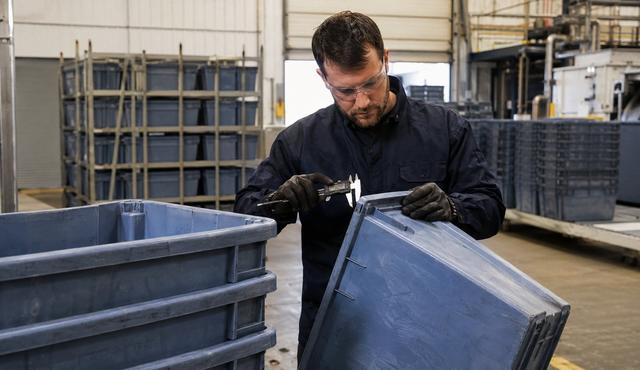
Reusable Transport Packaging
A regulatory-led programme examining dimensional stability, closure performance and damage across 100 wash, handling and stacking cycles as the client prepares for expanding European packaging-reuse requirements.
View illustrative engagement →
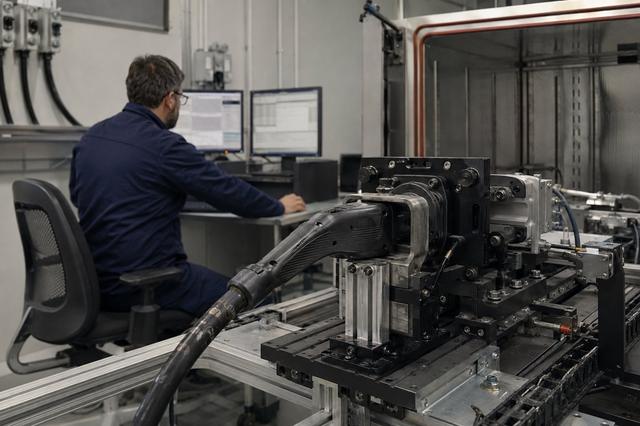
EV Charging Connector
A combined mating-cycle, ingress and temperature-exposure programme assessing contact stability, seal wear and locking performance before supplier nomination.
View illustrative engagement →
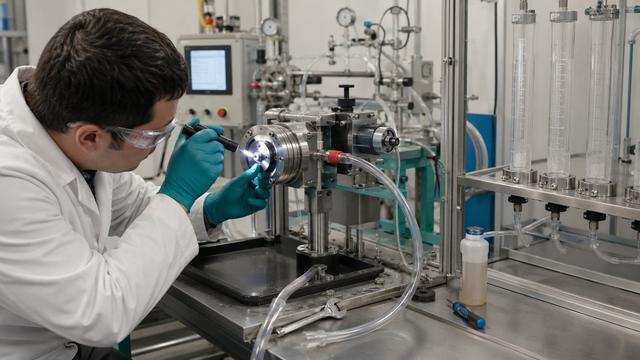
Industrial Dosing-Pump Head
A 250,000-cycle assessment tracking flow-rate drift, seal condition and intermittent leakage across two material configurations.
View illustrative engagement →
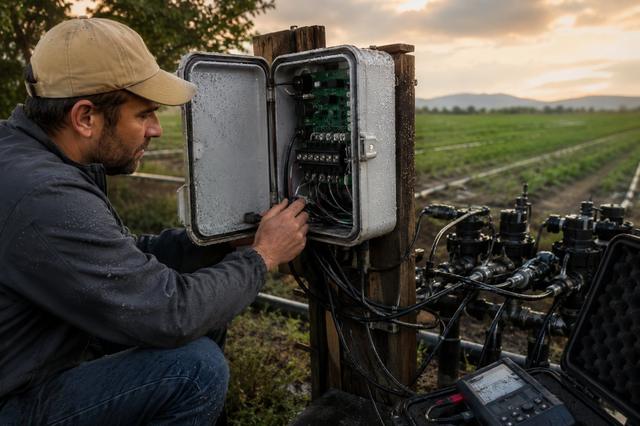
Outdoor Irrigation Controller
A seasonal exposure sequence combining UV, moisture, thermal variation and repeated connector use to evaluate enclosure, display and communication reliability.
View illustrative engagement →
Note:
All illustrative engagements are hypothetical and are not presented as real client outcomes. Numerical values, methods and timelines will be adapted to the product, applicable standards, available specimens and project scope.
Research Basis
This capability framing reflects established reliability-engineering and environmental-testing practice. Depending on the product and decision, project-specific research may consider relevant parts of the IEC 60068 environmental-testing series, IEC 60529 ingress-protection classification, ISO 16750 for road-vehicle electrical and electronic equipment, ASTM D4169 for shipping-unit performance testing, and other sector-specific standards. The reusable-packaging example also reflects the direction of Regulation (EU) 2025/40 on packaging and packaging waste. Applicable editions and requirements would be confirmed during project scoping.
Let’s Discuss Your Project
Tell us what the product is expected to survive, how it will be used, and which decision the evidence must support. August Research can develop the mission profile, identify suitable external facilities and specialists, coordinate the test programme, and translate the resulting evidence into clear engineering actions.
Start with the decision
Share the product stage, expected service conditions, known failure concerns, target market and desired decision date. We will use these inputs to shape an appropriate reliability and durability assessment.