FIELD VALIDATION STUDIES
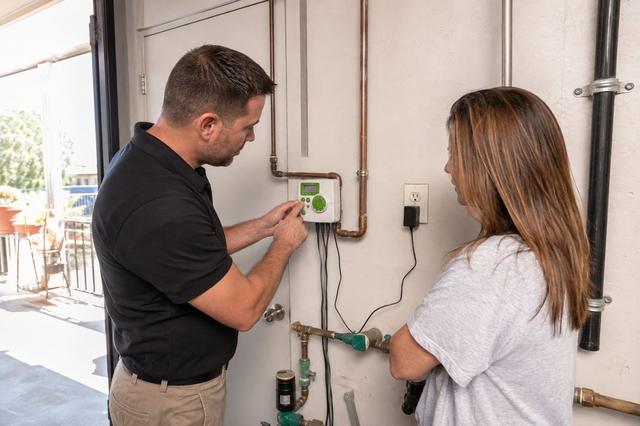
Industrial Monitoring Sensor at a Live Customer Site
Illustrative field validation | installation, data continuity and service-team integration
Sector
Industrial monitoring
Duration
7–10 weeks
Decision
Deployment route

Decision to be made
Decide whether an industrial monitoring sensor can progress to a regional pilot, whether site integration requires remediation, or whether additional observation is needed.
Project context
A hypothetical industrial-technology team has verified the sensor in a controlled environment. At the customer site, the decision depends on installation access, connectivity, maintenance practice, alarm ownership and whether the service team can act on the data within normal operations.
Illustrative evidence scope
- 2 live customer sites with different maintenance models
- 12 operators, maintenance technicians and reliability leads
- Illustrative 40-day monitored deployment
- Installation records, signal-continuity log, alarm-response interviews and maintenance-work-order review
Site-integration signal map
The evidence is mapped from installation to the operational action it triggers. It avoids treating a stable data signal as proof that the deployment system is working.
Physical installation
Field engineer record and site photographs
→
Operational decision
Can the sensor be placed and maintained safely?
Connectivity
Signal-continuity and exception log
→
Operational decision
Where does data flow break or degrade?
Alert ownership
Operator interview and alarm record
→
Operational decision
Does the right role receive and interpret the signal?
Maintenance action
Work-order review and technician interview
→
Operational decision
Does the information change a real maintenance decision?
Illustrative site-integration signal flow: a technical signal only becomes useful when it reaches an accountable operational action.
How the illustrative evidence would be interpreted
- Trace each technical observation through to the operational role expected to act, so a stable sensor signal is not mistaken for a workable service process.
- Review connectivity exceptions, alarm ownership and work-order evidence together to identify whether the issue lies with the installation, data path, process or decision rights.
- Define the site and service conditions required for a regional pilot, including monitoring triggers, escalation ownership and the evidence needed before expansion.
How the work would be delivered
August Research would define the field-equivalence criteria, scout and assess suitable external sites or participant routes, coordinate permissions and data capture, review evidence at agreed checkpoints, and translate the findings into a decision-ready pack. August Research does not own the sites or facilities used for this work.
Stage | Illustrative delivery activity | Decision checkpoint |
|---|---|---|
Weeks 1–2 | site assessment, provider coordination and data-capture plan | Review evidence boundary |
Weeks 3–7 | installation, monitored deployment and weekly signal review | Review evidence boundary |
Weeks 8–10 | service-team review, decision pack and next-pilot route | Review evidence boundary |
Illustrative outputs
- Site-integration signal map linking technical events to operational response
- Exception register separating connectivity, process and ownership issues
- Regional-pilot recommendation with explicit site and service conditions
What the decision pack would contain
The decision pack would link site-integration evidence to the relevant operating owner, separate technical events from service-process gaps, and define the remediation, monitoring and site-selection conditions for a regional-pilot decision.
Note:
This is a hypothetical illustrative engagement, not a client outcome. Participant numbers, methods, timing and possible outputs are illustrative and conditional on the product, provider and participant response, permissions, logistics, data availability and project scope. Any formal assessment, regulatory interpretation or conformity decision remains with qualified providers and responsible parties.
Research and regulatory context
The example does not establish cybersecurity, safety, performance or regulatory compliance. Any formal assessment remains with appropriately qualified providers and responsible parties.
What we would confirm before starting
- The deployment decision, target operating conditions and evidence boundary that the study must address.
- Suitable external sites, participant roles, permissions, consent and any data-handling requirements.
- Product readiness, observation methods, escalation procedures and the practical conditions needed for safe, usable field work.
- The review checkpoints, responsible stakeholders and decision criteria for expansion, remediation, repeat testing or deferral.
Let’s Discuss Your Project
Tell us the operating environment, participant roles, workflow handovers, exceptions and deployment decision you need to make. We can shape a field-validation route around the evidence that decision requires.
Illustrative timeline
Illustrative timing: 7–10 weeks. Actual timing depends on response, access, readiness, logistics and scope.