KEY OPINION LEADER INTERVIEWS
Building Confidence in a Novel Industrial Heat-Pump Platform
THE DECISION
What must be credible to influential industrial stakeholders before a novel heat-pump platform is taken forward for pilot partnerships and wider market engagement?
The Context
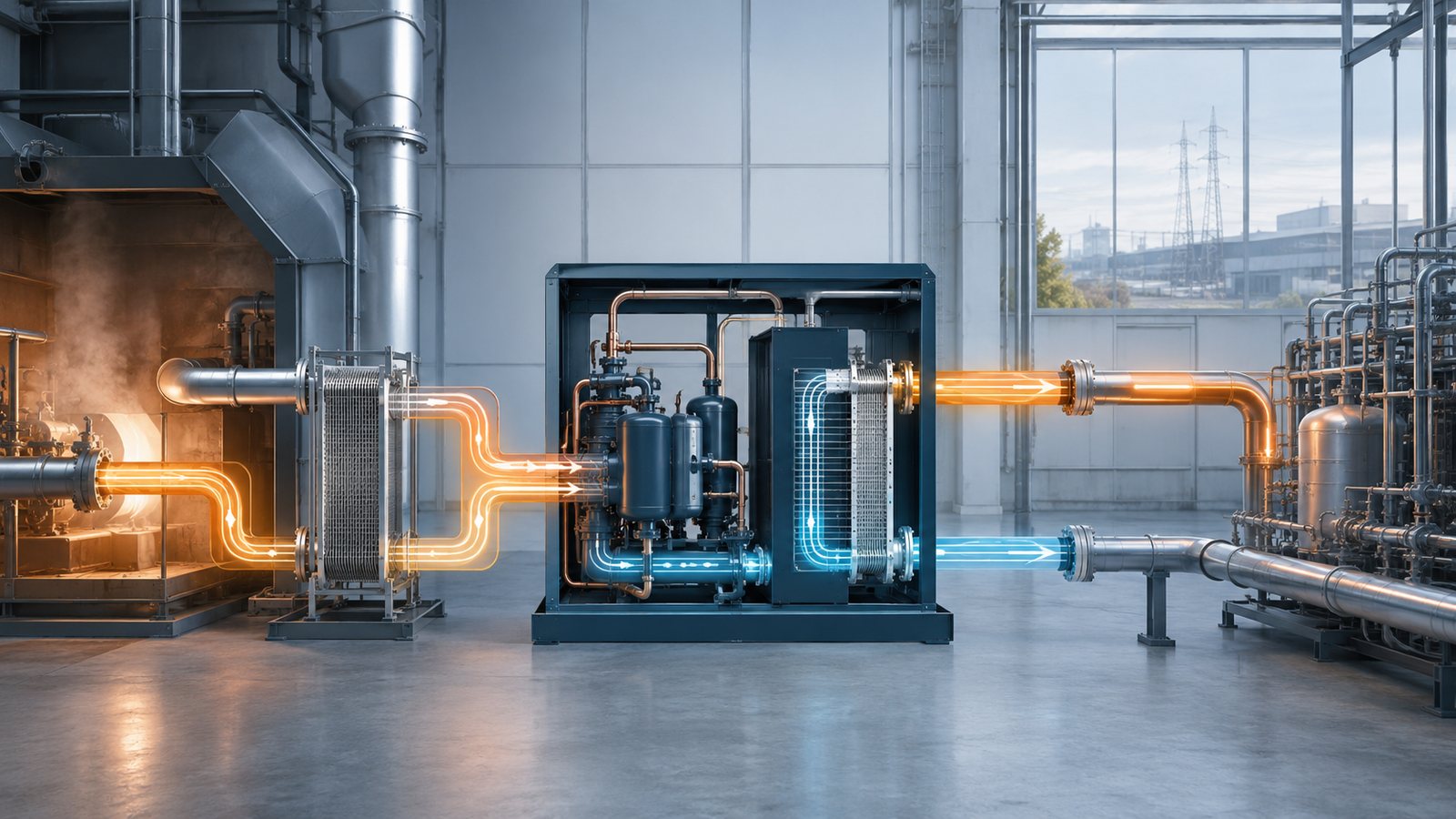
A hypothetical platform developer has designed an industrial heat-pump system intended to recover low-grade waste heat and supply useful process heat in food, chemicals and light manufacturing. The technical concept has been demonstrated in a controlled setting. The next question is not whether the platform is interesting. It is whether potential users, engineering partners and sector influencers will regard it as credible enough to trial in a live production environment.
Industrial heat pumps can already serve a meaningful share of low- and medium-temperature process heat. Yet adoption commonly depends on more than efficiency claims: compatibility with the site heat balance, interruption risk, electricity price exposure, grid connection, maintenance capability and a proof case that resembles the intended operation. This engagement tests those conditions through the voices that shape external confidence.
What August Research Was Asked to Clarify
- Which evidence and operating proof points would make the platform credible to industrial decision makers?
- Which use cases should be prioritised for a first pilot, and which claims should not yet be made?
- Where could adoption stall, even if the thermal performance is promising?
- Which institutions, partners and practitioner communities should be engaged before a wider market approach?
How the KOL Group Was Selected
The KOL group was designed around the credibility pathway for this specific platform, not assembled from a general list of energy experts. Every participant needed direct exposure to industrial process heat, electrification decisions or the institutional conditions that determine whether a novel system is considered bankable, operable and worth piloting.
Shared specialist background
All KOLs had practical experience with industrial heat systems, decarbonisation projects or the adoption of energy equipment in process industries.
Decision relevance
Each could clarify a real pilot, purchasing, engineering, investment or policy condition that would influence the platform’s next move.
Comparable operating context
The group covered continuous or quality-sensitive process environments where reliability, integration and downtime risk matter.
Independent challenge
Candidates were screened to avoid a group dominated by equipment vendors or advocates with an expected endorsement.
KOL Perspectives Brought Into the Engagement
Process-energy leader
Experience integrating heat recovery and utility systems within operating plants. Tests site fit, control logic, outage tolerance and operator acceptance.
Industrial decarbonisation adviser
Experience comparing electrification routes at portfolio level. Tests the emissions narrative, economics and circumstances in which heat pumps are not the preferred option.
EPC or plant-engineering specialist
Experience designing and delivering brownfield upgrades. Tests constructability, interfaces, commissioning risk and the practical cost of plant disruption.
Utility and flexibility specialist
Experience with industrial power demand, tariffs and grid constraints. Tests connection risk, demand profile and the value of flexibility or thermal storage.
Sector association or standards voice
Experience shaping good practice, safety expectations or sector knowledge. Tests the evidence language and channels required to build wider confidence.
The KOL Conversation
The discussion guide was structured around claims that could change the adoption decision. It did not ask KOLs to rate the platform or endorse it. It asked what they would need to see before recommending a pilot, introducing the developer to an operating site or treating the solution as a credible option for process heat.
Claim under review
“The platform can deliver useful low-carbon process heat without material disruption to the host facility.”
Evidence KOLs would expect
A site-specific heat and load profile, integration concept, performance boundaries, downtime plan, operating data and clear baseline comparison.
Adoption condition
A first pilot must address a genuine site problem and be supported by the plant team, not operate as a detached technology demonstration.
Credibility risk
A generic efficiency claim without a comparable process context could be seen as insufficient for an investment or operating decision.
Illustrative KOL Signal Map
The engagement uses a signal map, not a consensus score. It separates where KOLs are likely to see a credible opening from the questions that require proof before the platform is positioned more broadly.
Signal area | Illustrative KOL view | Implication for the next move |
|---|---|---|
Use-case fit | Promising where waste heat, sink temperature and production continuity align. | Choose one tightly defined pilot context rather than several sectors at once. |
Economic credibility | Electricity exposure and connection timing can dominate the business case. | Publish the boundaries of the business case and develop a tariff and grid checklist. |
Operational confidence | Plant teams will focus on commissioning, maintenance and failure response. | Build the pilot protocol with the operating team and define fallback arrangements. |
Influence and Adoption Blueprint
1. Narrow the first proof case
Select one process context with a clear heat-source and heat-sink match, a committed site owner and an achievable integration window.
2. Build an evidence pack for practitioners
Show operating boundaries, integration assumptions, expected maintenance approach, comparison baseline and a transparent view of site dependencies.
3. Engage the right pilot ecosystem
Prioritise plant operators, engineering partners, utility contacts and relevant associations whose involvement improves the credibility of the proof case.
4. Use KOL input to sequence the narrative
Lead with the specific process problem being solved. Reserve broader decarbonisation claims until live operating evidence supports them.
Illustrative Output
August Research would provide a KOL Influence and Adoption Brief that records the stakeholder roles consulted, the proof requirements they surfaced, adoption friction, priority engagement opportunities and a recommended path to a credible first pilot.
Note: Findings are illustrative and conditional. They are not presented as real client outcomes.
Let’s Discuss Your Project
If your industrial decarbonisation proposition needs to earn confidence beyond the technology team, August Research can design a KOL Interview programme around the proof points, stakeholder roles and pilot conditions that matter most.
External context used for this illustration: International Energy Agency and U.S. Department of Energy material on industrial process heat, electrification and industrial heat pumps. No external data is presented as a client finding.