
KEY OPINION LEADER INTERVIEWS
Credibility Assessment for a Circular-Textiles Material Proposition
THE DECISION
What evidence, value-chain alignment and external validation are needed before a circular-textiles material proposition earns credible support from brands, processors and sustainability influencers?
The Context
A hypothetical materials company has developed a recycled textile feedstock intended for use in selected apparel applications. The material has promising technical characteristics, but commercial adoption depends on whether brands, mills, recyclers and sustainability leaders believe the proposition can meet quality, traceability and supply expectations.
What August Research Was Asked to Clarify
- Which product categories offer the most credible first application?
- What traceability, quality and environmental evidence will influential stakeholders require?
- Where could the proposition fail between material promise and brand adoption?
- Which value-chain voices should shape the partnership and claims strategy?
How the KOL Group Was Selected
The KOL group was selected across the textile value chain because credibility depends on more than material performance. It requires a view of design requirements, processing realities, traceability expectations and the language that brands can responsibly use.
Shared specialist background
Experience in textile materials, circular supply chains, brand sourcing, processing or sustainability claims.
Decision relevance
Each role could test a quality, traceability, sourcing or adoption condition that changes the route forward.
Value-chain coverage
The group represented the connections between feedstock, processing, brand specification and end-market confidence.
Independent challenge
Candidates were screened to avoid treating a circular claim as credible without evidence of practical viability.
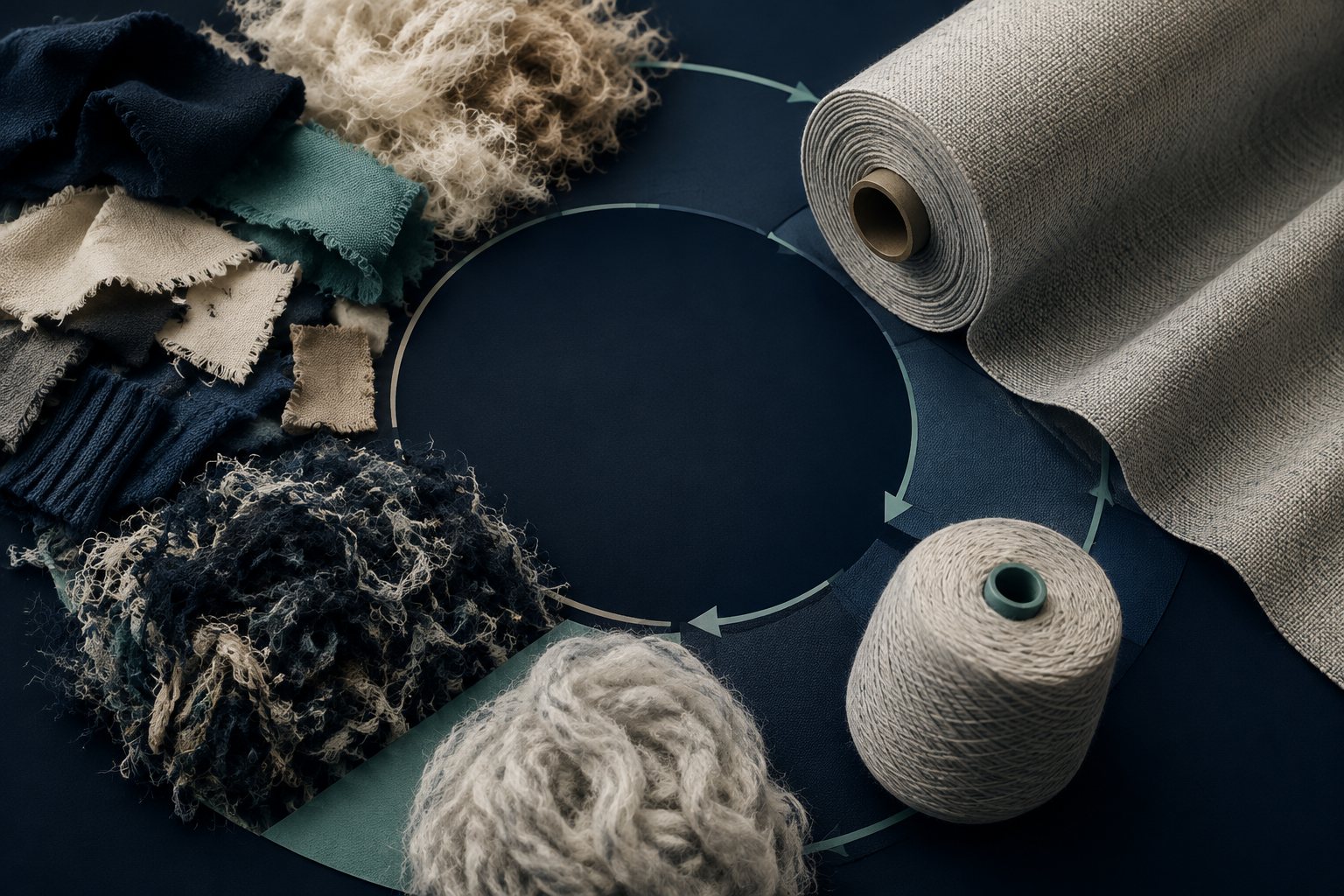
Illustrative Circularity Credibility Loop
The visual follows the proof required to move from recovered material to a responsible brand proposition.
TRACEABLE INPUT
PROCESS FIT
BRAND SPEC
CREDIBLE CLAIM
Illustrative pathway visual: circularity claims gain credibility only when the material and value chain can support them.
KOL Perspectives Brought Into the Engagement
Textile-materials specialist
Tests material consistency, performance boundaries and suitable first applications.
Mill or processor leader
Tests process compatibility, yield, quality control and scaling constraints.
Brand sourcing or product lead
Tests specification fit, supplier expectations and the business case for adoption.
Traceability and standards voice
Tests chain-of-custody evidence, certification logic and defensible communication.
Circular-economy adviser
Tests the wider system logic and where the proposition could overstate its impact.
Illustrative KOL Signal Map
The signal map distinguishes a compelling circularity narrative from the evidence required to make a responsible material claim.
Signal area | Illustrative KOL view | Implication for the next move |
|---|---|---|
Material fit | Interest is strongest in applications with clear specification tolerance. | Start in a category where performance and visual consistency can be demonstrated. |
Traceability | KOLs will require visibility beyond a headline recycled-content figure. | Build chain-of-custody evidence and clarify claims boundaries. |
Brand adoption | Procurement teams need supply and quality confidence, not only sustainability appeal. | Engage processors and sourcing teams early in the validation plan. |
Influence and Adoption Blueprint
1. Select a credible first category
Match the material to an application with realistic technical and brand requirements.
2. Prove the chain, not only the input
Connect traceability, process evidence and product specification.
3. Engage value-chain KOLs
Prioritise materials, processing, sourcing and standards perspectives.
4. Refine the proposition responsibly
Use feedback to define claims that can be substantiated at launch.
Illustrative Output
August Research would provide a KOL Influence and Adoption Brief that records the stakeholder roles consulted, the proof requirements they surfaced, adoption friction, priority engagement opportunities and a recommended path to the next credible action.
Note: Findings are illustrative and conditional. They are not presented as real client outcomes.
Let’s Discuss Your Project
If your circular-material proposition needs to gain confidence across a complex value chain, August Research can design a KOL Interview programme around the proof, partners and claims that matter most.
External context is used only to shape this hypothetical illustration. No external data is presented as a client finding.