PROTOTYPE FEEDBACK STUDIES / FOR DEMONSTRATION PURPOSES
Could a Smart Home Energy Controller Earn Its Place in a Pilot?
A hypothetical prototype-feedback engagement for a tabletop controller and companion app designed to make household energy use easier to understand and act on.
THE DECISION BEFORE THE TEAM
Proceed to a limited home pilot, or change the set-up flow, savings explanation or installer handover before the prototype is exposed to a wider audience?
The Prototype in Context
The illustrative client had an early combined display-and-gateway prototype, a companion mobile app and a simple installation guide. The proposition showed current household energy use, suggested lower-cost times for selected activities and explained potential savings. The question was not whether the technology could function. It was whether people could understand, install and trust it well enough to make a pilot worthwhile.
Illustrative Prototype Specification
These are draft design parameters for the prototype shown to participants. They are included to make the feedback task concrete, not to describe a finished product or a technical commitment.
FORM FACTOR
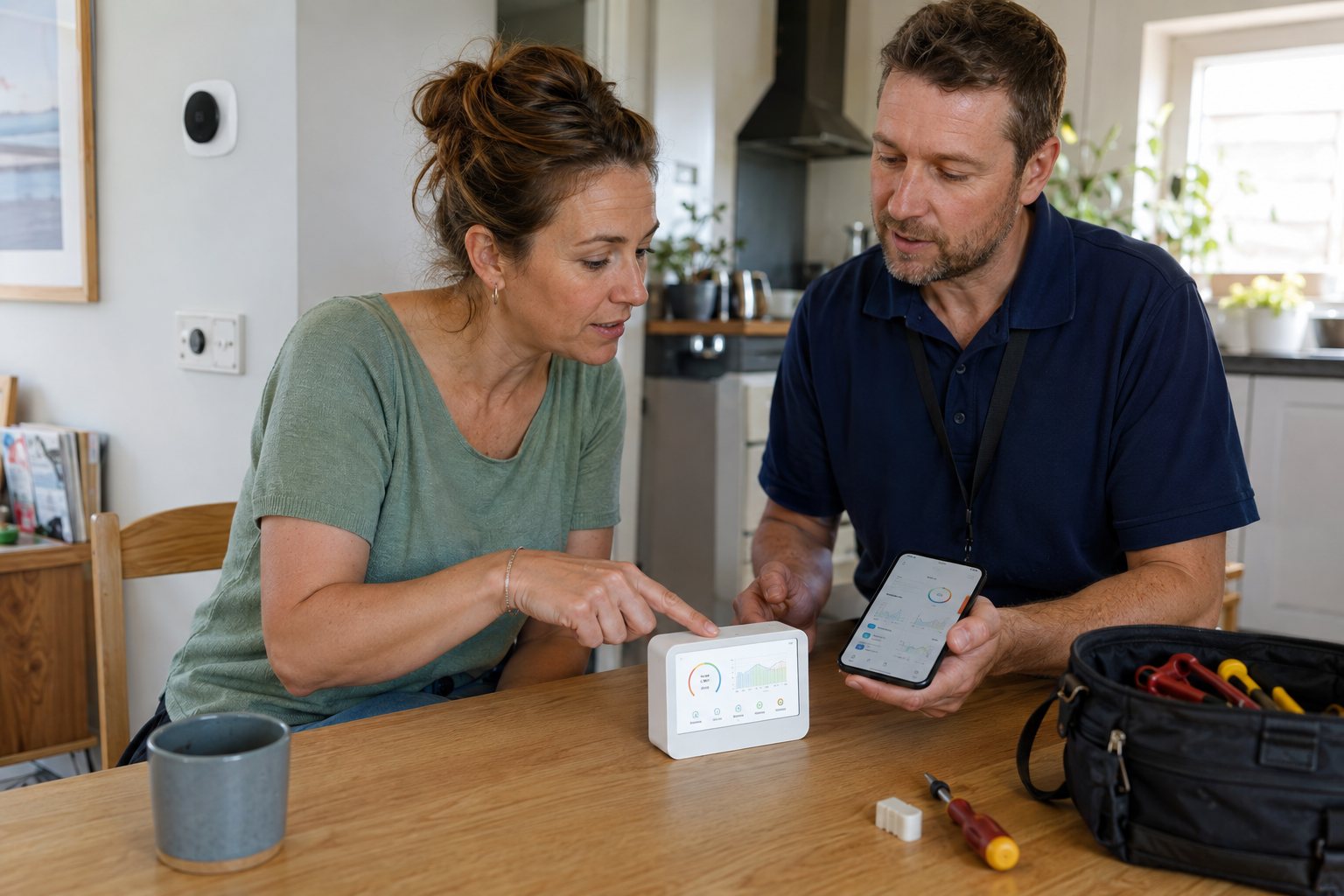
153 × 96 × 24 mm tabletop unit with a 5.0-inch colour display, adjustable stand and USB-C power input. A short internal battery keeps the screen live while it is moved between rooms.
DATA ROUTE
A local gateway receives authorised consumption and tariff data, then passes selected data to the controller and companion app. Direct connection to a supplier or national smart-meter network is not part of this illustrative prototype.
ON-SCREEN INFORMATION
Live household electricity demand in kW; current cost estimate in pounds and pence where a tariff is configured; daily and weekly consumption; and the next lower-cost time window. Appliance-level disaggregation is not claimed.
CONTROL & PRIVACY BOUNDARY
The prototype gives advice only. It does not automatically switch appliances, alter a tariff or make a savings guarantee. App synchronisation and any external data sharing require explicit household consent.
What the Study Still Needs to Test
- Comprehension Can a household distinguish a live cost estimate from a bill, a forecast or a guaranteed saving?
- Placement Does the controller sit where people will actually look at it, and does its power arrangement work in that location?
- Handover Can an installer or adviser explain the local data route and consent boundary without creating confusion or mistrust?
The Feedback Field Was Built Around the Handover
Instead of treating “the consumer” as the only audience, the study tests the moments through which the product reaches the home. The participant mix is selected for coverage of the decision, rather than as a fixed representative sample.
HOME
12 householders
Unbox the controller, choose a place for it, connect the app and explain what the savings screen means to them.
INSTALL
5 electrical installers
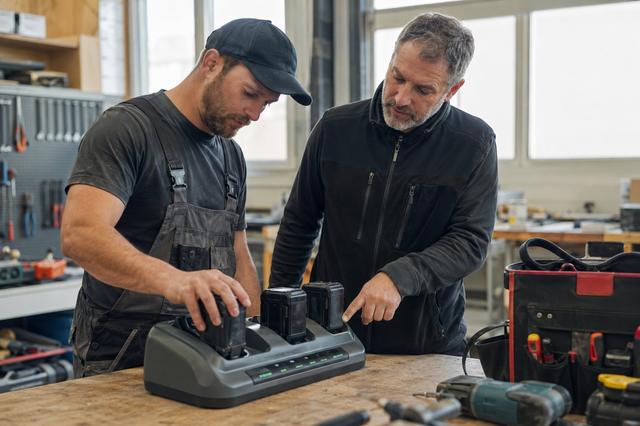
Walk through the proposed handover and identify where time, training, compatibility or customer questions would create friction.
EXPLAIN
4 energy advisers
Use the prototype to answer a household question about cost, timing and confidence without relying on technical language.
SELL & SUPPORT
6 channel, retail and support roles
Test the product promise, point-of-sale explanation and the likely reasons for a support call or return.
Delivery Method
- Scenario-led sessions Moderated 45 to 60 minute home, installer and channel sessions use simple tasks rather than a generic discussion guide.
- Matched prototype fidelity The physical controller, app screens, packaging insert and handover guide are shown together so each role can react to the real operating picture.
- Cross-role synthesis August Research compares where a signal is shared, role-specific or conditional, then separates a necessary prototype change from a preference that should not drive the build.
Feedback Capture and Triangulation
After each task, participants complete a compact online or paper form covering clarity, trust and likely use. Follow-up interviews explain why a response was given. August Research reads those responses alongside observed task behaviour and the household, installer, adviser and support perspectives, so a repeatable pattern is separated from a single-role concern.
Illustrative Decision Lens
The output is not an approval score. It is a practical evidence threshold for the pilot decision.
UNDERSTAND
At least 8 of 12 householders can describe the controller’s purpose and one action it would prompt, without facilitator help.
If not met, simplify the first-use screen and the core value statement before pilot.
SET UP
At least 4 of 5 installers can complete the proposed handover without introducing an additional training step.
If not met, redesign the handover kit or narrow the initial installer route.
TRUST
Energy advisers and channel roles can explain the savings indication without introducing an unsupported promise.
If not met, change the savings language, evidence cue or commercial claim before release.
What the Client Would Receive
- Pilot Decision Brief A concise proceed, proceed with conditions or pause recommendation, tied to the product decision rather than a general satisfaction result.
- Prototype Change Agenda A prioritised record of screens, claims, physical cues, installation steps and support content to retain, revise, test again or remove.
- Handover Friction Map A role-by-role view of the points at which product understanding can be lost between installation, household use, advice, retail and support.
- Pilot Readiness Checklist The evidence, materials, claim guardrails and participant conditions required for a focused next-stage pilot.
Illustrative Timing
4 to 6 weeks from agreed research design and available prototype materials to final decision readout. Illustrative project assumptions only.
Primary-research timelines are indicative and depend on participant/provider availability, response times, scope complexity and availability of inputs/materials.
Research Perspective
The scenario is framed around the established role of in-home displays and smart meters in helping households see near real-time energy use and cost information. It is not a claim that the illustrative client’s device connects to any particular meter, tariff or energy provider.
Sources reviewed in framing: Ofgem, “Get a smart meter” (accessed August 2026); UK Government, “Smart meters: a guide for households”; Energy Saving Trust, “Smart time of use tariffs: all you need to know”.
Let's Discuss Your Prototype
August Research can help you test whether a connected product’s promise survives the real handover between household, installer, adviser and channel team.
Note: This is a hypothetical illustrative engagement created to demonstrate the Prototype Feedback Studies service. It does not describe a client project or actual research outcomes.