PROTOTYPE FEEDBACK STUDIES | HOUSEHOLD ROUTINE ILLUSTRATION
Will a countertop food-waste appliance become a habit, or a countertop obstacle?
A hypothetical feedback study for a small-appliance team deciding whether to take an early appliance into a 50-home pilot.
DECISION
Retain the current capacity, cleaning cycle and consumable approach, or revise the product before a broader home trial.
Prototype specification
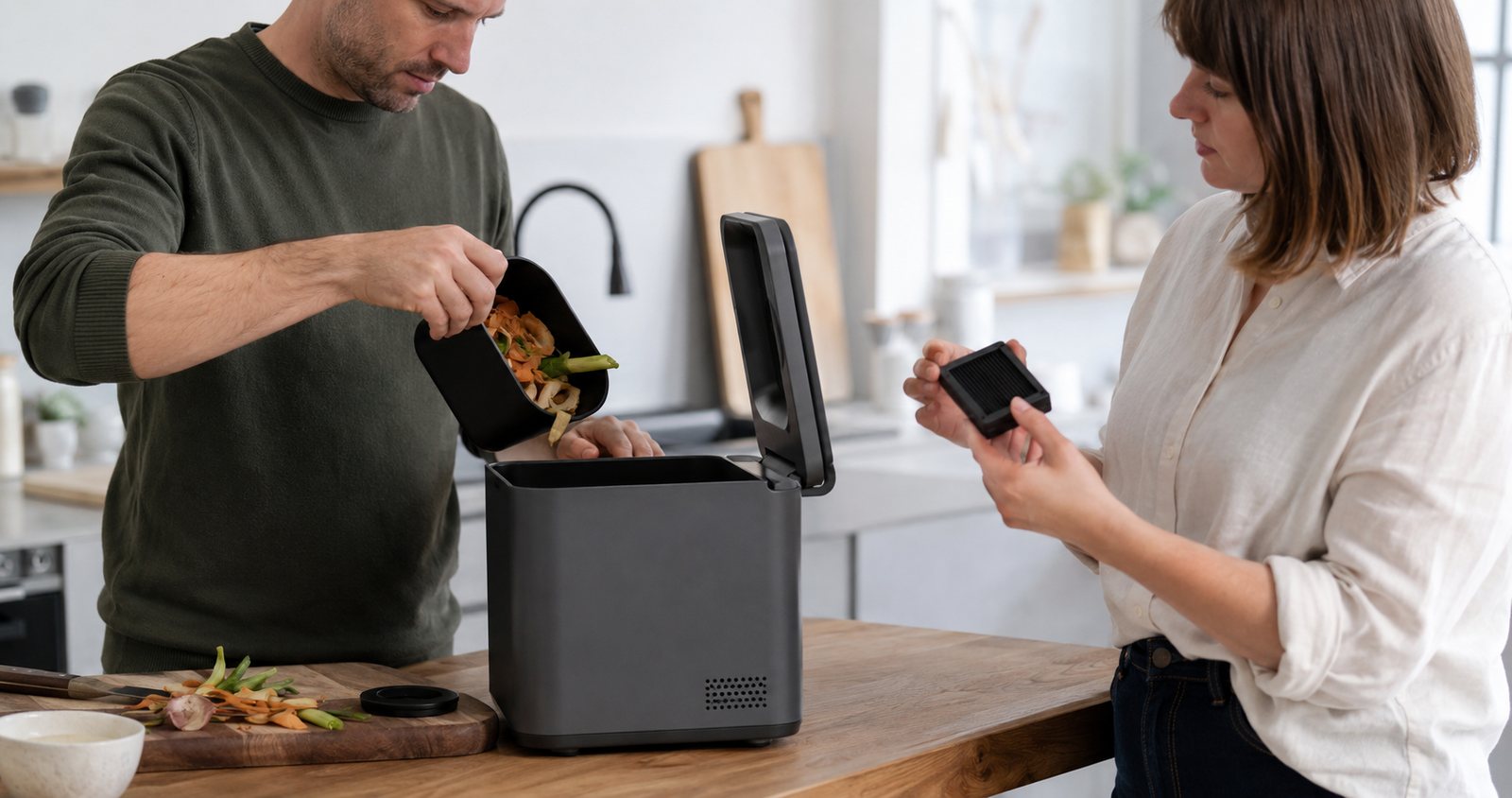
A 2.8 L removable processing caddy with a nominal 0.7 kg batch, 500 W heating and mixing cycle, and a replaceable activated-carbon odour cartridge designed for an estimated 60 cycles. The study does not test compostability, pathogen reduction, municipal acceptance or environmental claims.
Feedback field
9 household cooks, spanning solo, couple and family routines; 4 small-appliance buyers or retail advisers; 4 aftersales and spare-parts roles; and 3 kitchen-planning or cleaning practitioners.
Seven-day routine diary
A light-touch home diary is paired with two moderated check-ins. Each moment tests an ordinary household decision rather than a scripted feature tour.
Choose a location: counter space, socket access and what must move.
Load after meal preparation: caddy handling, lid behaviour and batch expectation.
Run and live alongside it: perceived noise, timing and confidence about odour.
Unload and clean: residue, dishwasher expectation and friction points.
Consider replenishment: filter change, storage and likely willingness to continue.
What we would capture
- Placement and routine-fit observations from the home diary.
- Language that causes uncertainty around cleaning, filters and output handling.
- A simple 1-to-5 friction rating at each moment, used as a directional prioritisation input rather than a market-size claim.
- Retail and service implications of a product that introduces a consumable.
Feedback Capture and Triangulation
Households log the routine in a simple online diary or supplied paper form, then discuss key moments in moderated check-ins. Responses are read alongside diary entries, in-home observations and service or retail interviews. This keeps a single memorable comment from outweighing a pattern seen across different participant groups.
Decision-ready output
- Routine adoption map showing where the appliance earns a place, and where it becomes a task.
- Cleaning and odour change agenda tied to observed moments, not generic satisfaction scores.
- Consumables and returns-readiness note covering cartridge explanation, storage and replacement language.
- 50-home pilot brief, including the behaviours worth instrumenting in the next phase.
Illustrative Timing
TIMING
4 to 6 weeks from agreed prototype, household safeguards and recruitment brief. Illustrative project assumptions only.
Primary-research timelines are indicative and depend on participant/provider availability, response times, scope complexity and availability of inputs/materials.
Reference Point
This illustration is designed around prototype feedback practice. Any future environmental, hygiene or performance claims would require separate technical and regulatory substantiation.
Let’s Discuss Your Project
We can shape the prototype, participant mix and decision threshold around the product question that needs resolving next.
Note: This is a hypothetical illustrative engagement. It does not describe a client project or represent client outcomes.