CONSUMER BEHAVIOUR ANALYSIS | ILLUSTRATION 02
Why households exceed the intended detergent dose
A wash-event study examining how load, soil, water beliefs, dosing aids and confidence cues change the amount used after the pack has been read.
PRODUCT
Concentrated liquid detergent
BEHAVIOUR
Dose selected at each wash
PRIMARY ROUTE
Mobile diary and dose photos
DECISION
Packaging and guidance changes
Background
A detergent manufacturer was preparing a more concentrated formulation. Pack instructions stated the recommended amount, yet consumer feedback suggested that some households still filled the cap by habit, increased the dose for large loads or added more when they were uncertain about cleaning performance.
The client needed to know which conditions created over-dosing, whether the cap and label contributed to the decision, and which guidance could reduce excess use without weakening confidence in cleaning.
The decision frame
MEASURE THE EVENT
Compare photographed doses with the label recommendation for that wash condition
REBUILD THE LOGIC
Capture the reason used at the moment the household selected the amount
CHANGE THE CUE
Identify which packaging, cap or digital guidance is worth testing
Why independent observation matters
Laundry behaviour is easy to misremember. An independent diary captures the actual dose, load and reason close to the event, reducing the influence of brand expectations and general claims about what the household usually does.
Illustrative study
All figures and findings are hypothetical. The proposed scale is calibrated to a 12-day household diary and a limited public-source window, not a category-wide census.
HOUSEHOLD AND EVIDENCE DESIGN
Recruit for dosing conditions, not demographics alone
The sample deliberately includes different machine, water, household and dosing-aid contexts because each can change the amount selected.
Feasible study frame
PUBLIC SCAN
HOUSEHOLDS
DIARY
FOLLOW-UP
3,200 records screened over a selected 24-month window
24 verified concentrated-detergent users
12 days with a target of 180 to 220 wash events
12 event-based interviews selected from contrasting cases
Final public and diary volumes would be confirmed after a source-yield check, screening incidence test and participant burden review.
Selection parameters
MACHINE AND LOAD
Front or top load, drum size and typical load fullness
WATER CONTEXT
Selected soft, moderate and hard-water locations
HOUSEHOLD
One or multiple laundry decision-makers and different household sizes
DOSING AID
Cap, cup, pump, free-pour or pre-measured format experience
SOIL OCCASION
Routine, sports, children, workwear and stain-heavy loads
CONCENTRATION EXPERIENCE
Recent switchers and established concentrated-product users
Participant kit
- Mobile diary link with one entry per wash event
- Reference card for photographing the dose and loaded drum consistently
- Pack and dosing-aid capture at enrolment
- Short clarification call only when an event record is incomplete or contradictory
SCOPE-SPECIFIC METHODOLOGY
Dose Reconstruction Diary
Each dose is analysed as a decision made under a specific load, soil, water and confidence condition.
Event sequence
1 BASELINE
Record product, pack and dosing aid
2 LOAD
Capture drum fullness, fabric and soil
3 DOSE
Photograph the selected amount
4 REASON
Record the immediate logic
5 OUTCOME
Capture satisfaction and any redose
6 REPLAY
Interview contrasting events
Questions framed around the recorded wash
This photo shows the cap level selected for yesterday's full mixed load. What made that amount feel right at the moment you poured it?
You checked the back label but then used more than the listed amount. Which part of the instruction did you use, and what did it not resolve?
The load included sports clothing and visible soil. What did the extra detergent represent to you: stain removal, freshness, reassurance or something else?
Another household member used a different amount for a similar load. How was each person's rule learned, and when does one rule override the other?
After the wash, what would make you keep, reduce or increase this amount next time?
The interviewer starts from the participant's documented event and does not assume that more or less detergent was correct.
ILLUSTRATIVE FINDINGS | SIGNALS AND EVENTS
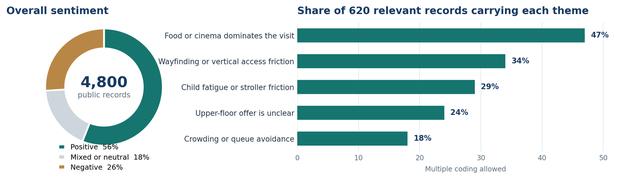
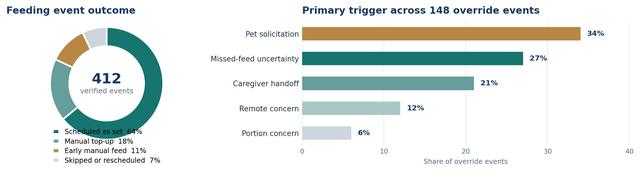
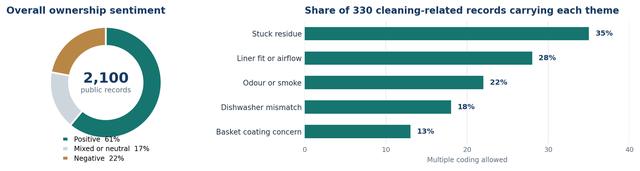
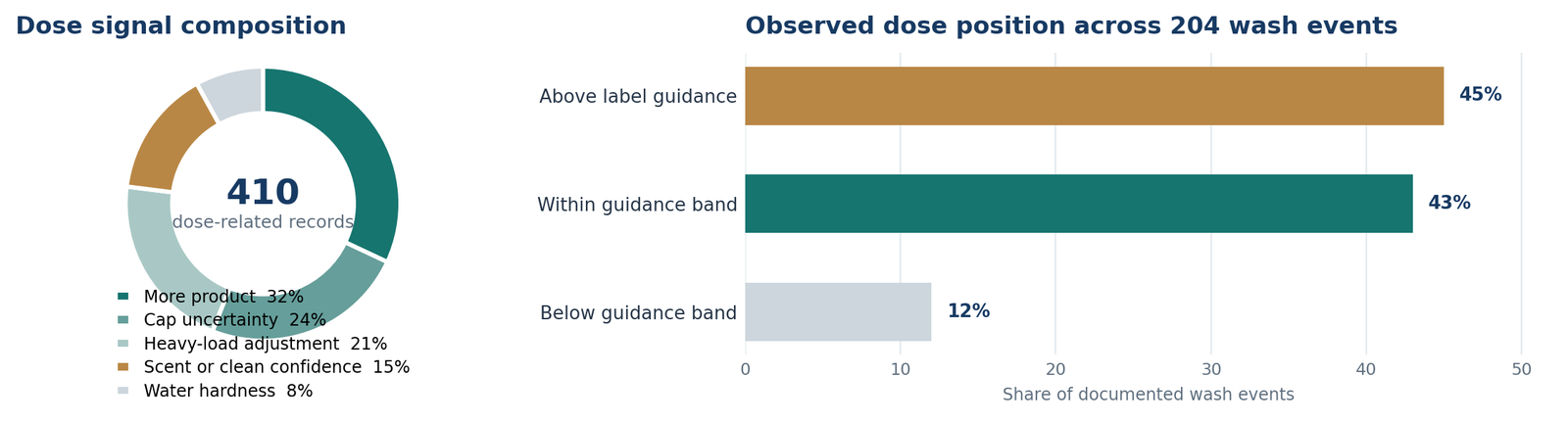
The same over-dose can come from different rules
Public records locate recurring dosing language, while event diaries show which rules are actually used during a wash.
Interpretation
Some households read the instruction but still apply a separate rule for heavy soil, drum fullness or fragrance.
A full cap can operate as an intuitive unit even when the pack defines a smaller concentrated dose.
Extra product often represents reassurance rather than a calculated response to water or load conditions.
ILLUSTRATIVE FINDINGS | DOSE CONDITIONS
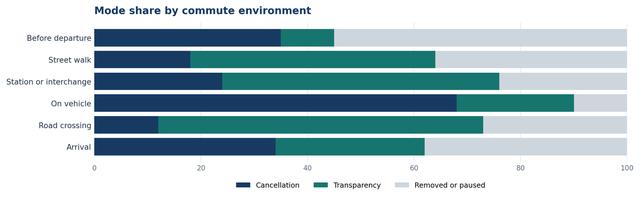
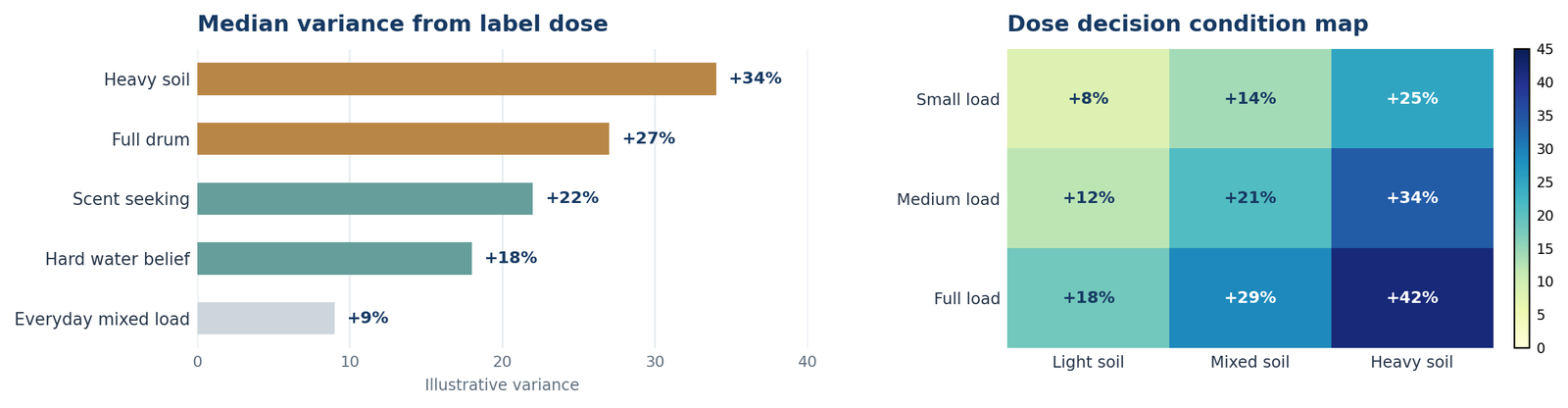
Over-dosing rises when several uncertainty cues combine
The condition map separates everyday habit from the situations where load size and visible soil reinforce each other.
Decision conclusion
The evidence would support testing a clearer dose unit rather than adding more text to the existing label. The proposed test would combine a visibly smaller reference mark, separate heavy-soil guidance and a load-size cue that does not imply a full cap for every wash.
What would be tested
CAP MARK
Visibility and interpretation of the concentrated dose
LOAD CUE
Small, medium and full-load guidance
SOIL CUE
When an adjustment is and is not recommended
CONFIDENCE
Whether the guidance preserves cleaning reassurance
DELIVERY AND DECISION USE
A dosing decision package for pack and product teams
The output connects event evidence to packaging, dosing-aid and communication decisions.
Client outputs
DOSE EVENT DATABASE
Coded event file linking photographed dose, load, context, reason and outcome
CONDITION MAP
Dose variance by load, soil, water belief, household and dosing aid
PACK CUE TEST PLAN
Stimuli, participant tasks and interpretation measures for proposed guidance
DECISION BRIEFING
PowerPoint readout for packaging, brand, sustainability and product teams
QUESTION GUIDE
Context-led follow-up questions linked to specific diary events
DATA BOUNDARIES
Clear distinction between public signals, observed events and directional hypotheses
Indicative delivery path
WEEK 1
Feasibility, screen and diary setup
WEEKS 2 TO 3
Public scan and household diary
WEEK 4
Event interviews and condition analysis
WEEK 5
Decision workshop and test plan
Timeline depends on recruitment incidence, diary completion and product access.
Contact Us
Discuss your consumer behaviour question
Tell us the behaviour, consumer group, setting, markets, available evidence and business decision. August Research will design the public-signal scan, diary, event interviews and dose decision view around the conditions that matter.