PHASE 2 ILLUSTRATION / INDUSTRIAL AUTOMATION
Selecting an Embedded Machine-
Vision Technology Partner
How a packaging-equipment manufacturer could evaluate a startup whose software may become part of every machine it sells.
DECISION
APPLICATION
CANDIDATES
SUPPORT HORIZON
Choose a technology partner
In-line defect inspection
3 shortlisted startups
Ten-year machine life
DECISION QUESTION Which startup should be embedded in the next packaging-platform release, and how can the manufacturer avoid creating an unsupported technical and commercial dependency?
The hypothetical client manufactures high-speed packaging machinery for food and consumer-goods plants. It intends to embed AI-enabled visual inspection into a new equipment platform, with the selected partner supplying models, edge software, integration support and continuing updates.
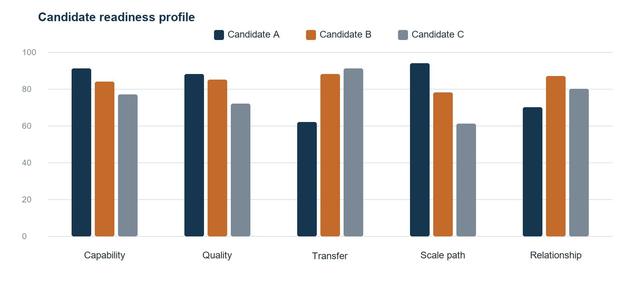
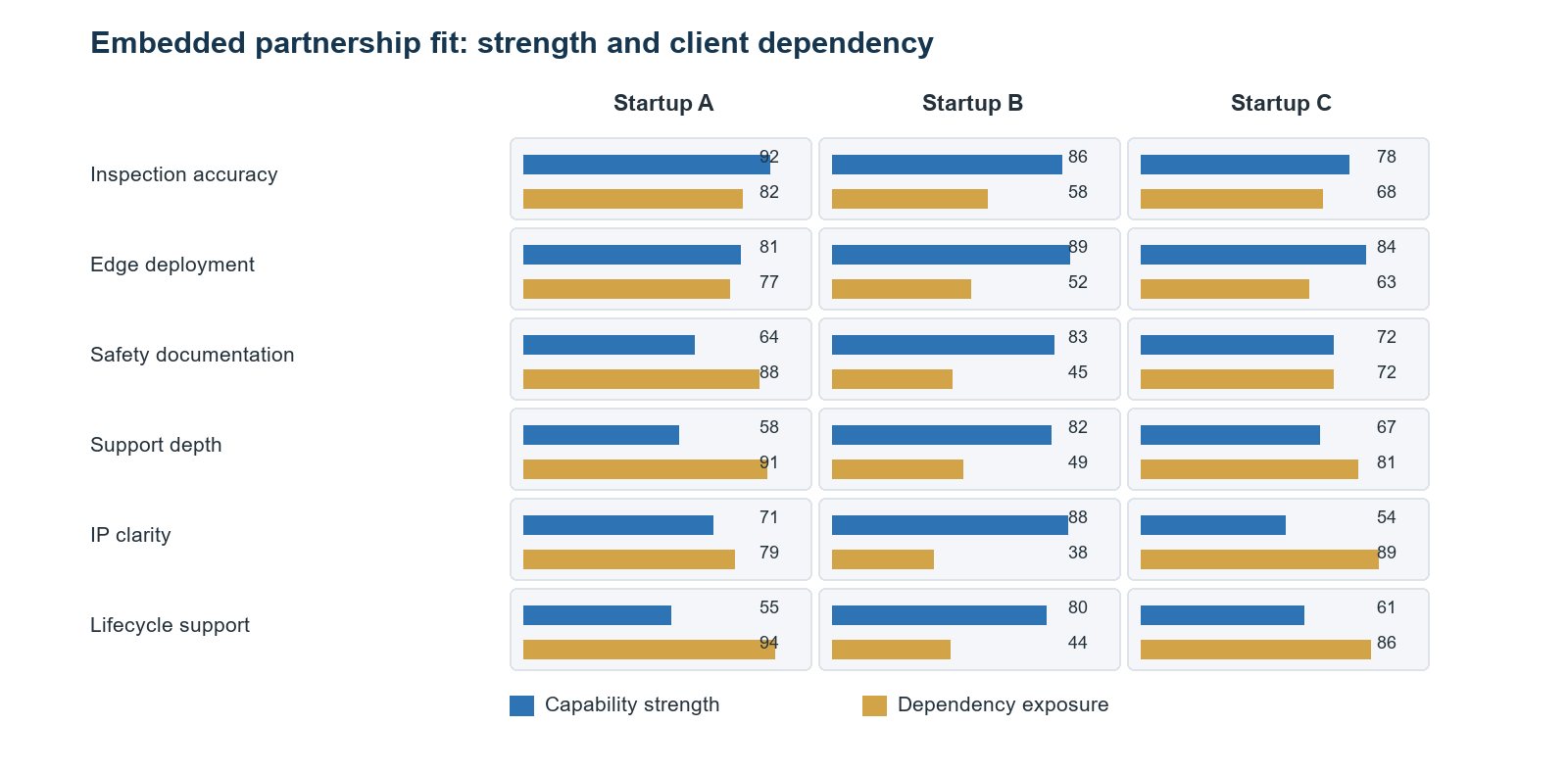
Startup A reports the highest benchmark accuracy and the strongest computer-vision research team, but much of the product knowledge sits with two founders. Startup B has slightly lower peak accuracy yet offers the clearest software architecture, documentation, support coverage and IP terms. Startup C has the largest customer list, although its solution depends more heavily on third-party libraries and cloud components.
Why the best demonstration may create the weakest long-term relationship
A laboratory benchmark can identify technical promise without showing whether the capability can be integrated, maintained, transferred and supported across the installed life of industrial equipment. The evaluation therefore considered both partnership strength and the dependency created for the manufacturer.
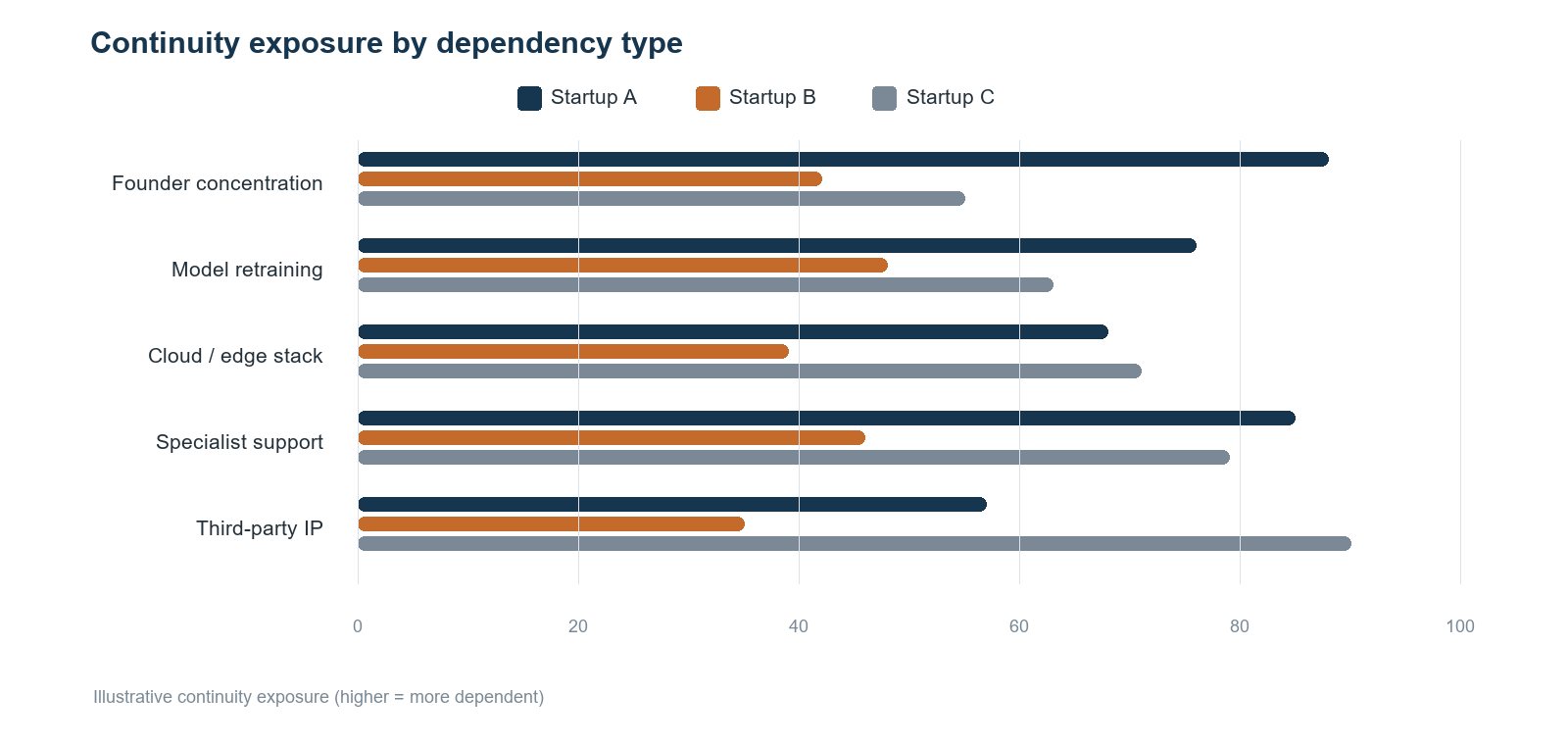
Knowledge concentration Startup A's performance advantage depended on a small group whose availability would constrain deployment, troubleshooting and future model changes.
Lifecycle mismatch The manufacturer's machines are expected to operate for approximately ten years, while startup products, funding plans and third-party software components can change much faster.
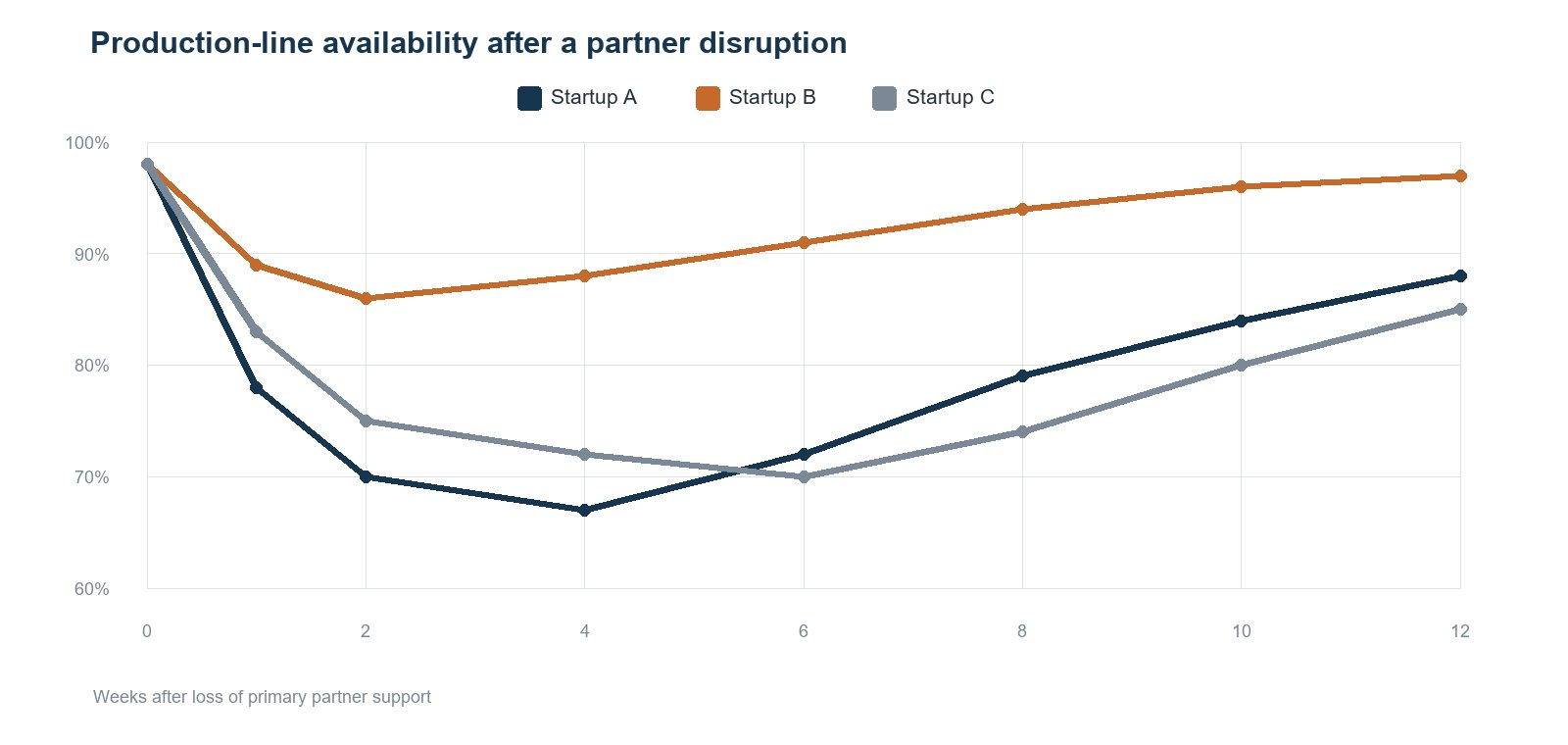
Transferable control Startup B provided more evidence that the client could understand the architecture, reproduce deployment, access documentation and continue safe operation during a support interruption.
Methodology: Embedded Technology Continuity Test
The assessment examines the technology and the relationship as one operating system. A candidate is only suitable if performance can be integrated into machinery, governed through product change and sustained after foreseeable disruption.
Use-case evidence translation Separate laboratory accuracy from performance under actual line speed, lighting, defect rarity, product changeover and false-reject constraints.
Architecture and control map Identify which models, libraries, cloud services, edge devices, interfaces, data and people are controlled by the partner, the client or a third party.
Safety and conformity interface Examine documentation, software-change control, traceability and the division of responsibilities where digital functions interact with machinery operation.
Commercial and IP durability Test licence rights, escrow or continuity mechanisms, data use, model ownership, change-of-control provisions and the economics of scaling across the installed base.
Continuity stress test Model founder departure, funding interruption, acquisition, cloud withdrawal and delayed support to determine whether the client can keep machines operating.
The candidate evidence picture
Decision factor | Startup A | Startup B | Startup C |
|---|---|---|---|
Illustrative line-test accuracy | 99.1% | 98.4% | 97.8% |
Edge deployment maturity | Strong prototype | Repeatable product | Established, cloud-linked |
Technical documentation | Partial | Structured and current | Mixed by component |
Key-person concentration | High | Moderate | Moderate-high |
IP and component clarity | Mostly proprietary | Clear ownership and licences | Material third-party reliance |
Support model | Founder-led | Tiered regional coverage | Partner and cloud dependent |
Evidence confidence | 78 / 100 | 89 / 100 | 72 / 100 |
The evidence does not replace production validation, cybersecurity testing, conformity assessment, legal review or source-code inspection. It identifies which partner merits deeper diligence and which relationship protections should be designed before integration accelerates.
Recommended relationship decision
DEVELOP UNDER GATED PARTNERSHIP Select Startup B for a staged co-development programme, subject to production acceptance tests, documented interfaces, continuity rights, approved software-change controls and a support model that does not depend on named individuals.
Required condition | Decision control | Escalation trigger |
|---|---|---|
Production performance | Acceptance dataset and false-reject ceiling | Performance misses agreed line condition |
Knowledge transfer | Architecture, deployment and support documentation | Critical process remains known by one person |
Software change | Joint release and traceability process | Unapproved change affects machine behaviour |
Continuity rights | Escrow, transition assistance and survivable licence | Funding or control event limits support access |
Scale economics | Unit and support terms across installed-base scenarios | Economics deteriorate beyond agreed volume band |
Startup A should remain a monitored technical alternative if its knowledge concentration and lifecycle model improve. Startup C should not progress until third-party component rights, cloud dependencies and long-term support responsibilities are materially clearer.
What August Research would deliver
Technology-to-use-case dossier Evidence linking claimed performance with production conditions, integration requirements and confidence limits.
Dependency and control map A structured view of software, data, people, IP, infrastructure and third-party dependencies across the embedded solution.
Continuity stress model Consequences of founder loss, funding interruption, acquisition, cloud withdrawal and delayed support.
Partnership gate plan Validation evidence, documentation, commercial protections and decision gates from pilot to platform release.
Indicative project delivery
Stage | Focus | Indicative timing |
|---|---|---|
Mandate definition | Use case, operating limits, lifecycle and exclusion criteria | Week 1 |
Partner reconstruction | Technology, team, ownership, finances and dependencies | Weeks 1-2 |
Fit assessment | Performance, integration, IP, support and governance | Weeks 3-4 |
Continuity testing | People, funding, acquisition and infrastructure scenarios | Week 5 |
Decision package | Partner recommendation, gates and diligence priorities | Week 6 |
Scope boundary
This illustration represents secondary research and supplied-document analysis conducted before production trials, cybersecurity assessment, conformity review, IP diligence, legal review and contracting.
All startups, performance figures, scores, relationship terms, findings and recommendations in this illustration are hypothetical and are included only to demonstrate the methodology.
LET'S DISCUSS YOUR TECHNOLOGY-PARTNER DECISION August Research can test whether an emerging technology partner is capable, governable and durable enough to become part of a client's product platform.
EVALUATE A TECHNOLOGY PARTNER | CONTROL EMBEDDED DEPENDENCY