PRODUCT PERCEPTION STUDY | CONSTRUCTION CHEMICALS
Would a Bio-Based Facade Sealant Be Seen as Durable Enough?
A controlled perception study in Lombardy, Italy, designed to separate the appeal of a renewable-material cue from the confidence required for facade specification and use.
SETTING
Milan, Bergamo, Brescia and surrounding project corridors
PRODUCT STAGE
Pre-launch cartridge, cured joint sample and technical proof pack
CLIENT DECISION
How to position and evidence the offer before market introduction
Background
A construction-chemicals company was preparing a partly bio-based, non-structural facade sealant for exterior wall joints. The product was intended to sit within the EN 15651-1 performance context. Management believed the renewable-material story could improve differentiation, but the same cue might lead facade professionals to expect lower weather resistance, weaker adhesion or shorter service life.
The central issue was not whether participants liked sustainability. It was whether the sustainability cue changed what they believed about performance, what proof they demanded and whether they would consider, specify, stock or use the product.
THE DECISION TENSION
Lead with the bio-based story and risk creating a durability penalty, or lead with conventional performance and risk losing the product's most distinctive market signal.
What the research needed to determine
MEANING
What does 'bio-based' make each role infer before technical explanation?
PROOF
Which evidence restores confidence, and which evidence is ignored?
ACTION
What would make the role trial, specify, stock, approve or reject?
Why an independent study mattered
A manufacturer-led conversation can quickly become a technical explanation or sales discussion. Neutral moderation allowed participants to express doubt before being shown the client's preferred proof, preserving the exact point where the intended meaning weakened or recovered.
02 | PARTICIPANT AND OUTREACH DESIGN
Select people by their responsibility for the product decision
The study was designed around four viewpoints in the facade-material decision system, not a broad construction-industry sample.
Illustrative participant architecture
VIEWPOINT | COUNT | SELECTION REQUIREMENT | WHAT IT REVEALS |
|---|---|---|---|
Facade contractors and applicators | 7 | Recent exterior-joint work; personally selects, trials or applies sealants | Tooling, cure, adhesion and failure-risk meaning |
Architects and facade specifiers | 5 | Specifies or reviews facade joint systems and supporting documentation | Specification confidence and proof threshold |
Distributor technical and commercial staff | 6 | Advises buyers or decides which construction-chemical lines to stock | Explainability, complaint risk and sellability |
Procurement and materials managers | 6 | Approves or buys facade materials for contractors or building projects | Commercial risk, availability and approval logic |
Screening parameters
PROJECT EXPOSURE
Exterior facade or window-perimeter joints within the previous 24 months
DECISION ROLE
Direct influence on selection, specification, stocking, approval or application
PRODUCT FAMILIARITY
Experience with at least two relevant sealant brands or chemistries
GEOGRAPHY
Lombardy-based work, with travel access to a central session when needed
CONTEXT
Mix of renovation and new-build exposure; varied project size and substrate conditions
INDEPENDENCE
No employment by the client and no recent paid role in developing the stimulus
LANGUAGE
Italian moderation, with technical terminology preserved in the transcript
ACCESS
Able to review the cartridge, cured joint sample and controlled proof materials
What the outreach looked like
TARGETED PROFESSIONAL RECRUITMENT
Role, project history and category exposure verified before invitation
CHANNEL AND MARKET ROUTES
Contractor, specifier and distributor networks used to reach less visible roles
CLIENT-APPROVED CONTACTS
Selected only where relationship sensitivity and sales influence could be controlled
Recruitment would stop when the four decision viewpoints were represented and the agreed experience criteria were met. The final count would remain subject to incidence, response, confidentiality and product-access feasibility.
03 | SCOPE-SPECIFIC METHODOLOGY
Sequential Evidence Reveal
Each participant encountered the same product in a controlled order. Meaning and confidence were recorded before the next cue could explain away the previous reaction.
1
UNBRANDED ENCOUNTER
Cartridge form, joint-use context and cured sample without brand or sustainability language
Capture baseline quality, category and durability expectations
2
SUSTAINABILITY CUE
Renewable-feedstock and bio-based language introduced without additional performance explanation
Isolate the meaning created by the cue itself
3
TECHNICAL PROOF
Existing product declaration, substrate compatibility, movement and weathering evidence presented
Identify which proof shifts confidence and which doubts remain
4
APPLIED EVIDENCE
Participant handles the cured joint and reviews a controlled application demonstration
Connect interpreted performance to trial, specification, stocking or approval
Question background given to participants
EXAMPLE DECISION CONTEXT
Imagine you are considering a non-structural exterior-joint sealant for a mid-rise facade renovation in Lombardy. The joint will be exposed to seasonal rain, heat, cold and movement. Respond only from the product materials you have seen at each stage. Do not assume performance information that has not yet been shown.
Sample questions asked after each reveal
NOTICE What did you notice first, and what did it suggest about the product before you looked for technical information?
INTERPRET What does the bio-based description make you expect about adhesion, flexibility, weather resistance and service life?
COMPARE Compared with the sealant you normally specify, buy, stock or apply, where does this product appear stronger, weaker or simply less familiar?
BELIEVE Which part of the proof changed your confidence? Which statement still needs independent or project-specific evidence?
ACT What would you do next: request a sample, run a site trial, seek a specification review, stock a limited quantity, approve the purchase or reject it?
Role-specific probes
CONTRACTOR
Which handling or cure behaviour would stop a site trial?
SPECIFIER
What must be documented before the product enters a specification?
DISTRIBUTOR
What explanation would prevent the bio-based cue becoming a complaint risk?
PROCUREMENT
What evidence supports approval without creating lifecycle risk?
04 | ILLUSTRATIVE FINDINGS
Where the sustainability cue reduced confidence, and how proof restored it
The figures below demonstrate the type of evidence the study could produce. They are not population estimates or actual client findings.
Exhibit 1 | Confidence progression
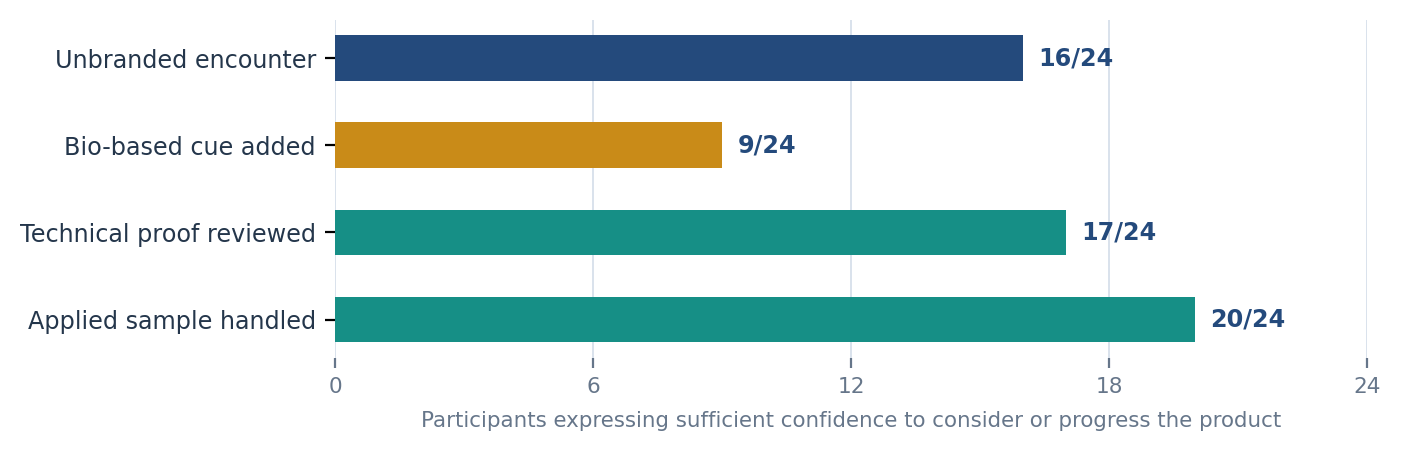
Exhibit 2 | Evidence threshold by decision role
ROLE | FIRST CONCERN CREATED BY THE CUE | EVIDENCE NEEDED TO PROGRESS |
|---|---|---|
Contractors | Lower adhesion or durability on exposed joints | Applied sample, substrate compatibility and visible tooling or cure behaviour |
Specifiers | Insufficiently proven material change | Declared performance context, movement capability and traceable durability evidence |
Distributors | Greater complaint or return risk | Clear category positioning, limits of use and a concise proof explanation |
Procurement | Higher lifecycle risk despite a sustainability benefit | Comparable performance evidence, warranty clarity, supply continuity and trial conditions |
Exhibit 3 | Cue-to-credibility map
CUE
Bio-based renewable-material language
INITIAL MEANING
Possible performance trade-off
CREDIBILITY BRIDGE
Performance declaration plus applied evidence
REVISED MEANING
Lower-impact option without an assumed durability sacrifice
DIRECTIONAL INTERPRETATION
A sustainability-first message was not rejected, but it required a performance bridge. The strongest sequence was performance category first, bio-based distinction second, and role-specific evidence immediately available.
Note: All participant counts and findings on this page are hypothetical and included only to show how the output could be presented.
05 | DECISION OUTPUT
From perception evidence to launch action
Change what the client shows, to whom, and in what order.
Illustrative recommendation
DECISION AREA | RECOMMENDED ACTION | REASON |
|---|---|---|
Positioning | Lead with exterior-joint performance; introduce the bio-based distinction second | Prevents sustainability from becoming the first performance inference |
Proof | Place movement, compatibility and weathering evidence beside the claim | Builds an immediate credibility bridge for specifiers and procurement |
Trial | Offer a cured-sample and application review to contractors and distributors | Turns durability concern into observable handling evidence |
Segmentation | Use different proof routes for specification, stocking, approval and use | One evidence package does not resolve every role's risk |
What the client would receive
CUE-TO-CREDIBILITY MAP
Which product cue created each meaning and what shifted it
ROLE EVIDENCE THRESHOLDS
Proof required for trial, specification, stocking and approval
MESSAGE SEQUENCE
Recommended order for performance, sustainability and supporting evidence
OBJECTION REGISTER
Concerns by role, trigger and remaining confidence gap
STIMULUS REPLAY
What each participant had seen when the perception changed
DECISION BRIEF
Actions for launch content, samples, sales support and further testing
Indicative delivery
WEEK 1
Decision frame and stimulus audit
WEEK 2
Recruitment and screening
WEEKS 3-4
Controlled sessions
WEEK 5
Cue and confidence analysis
WEEK 6
Decision readout and assets
Timing is indicative and depends on participant incidence, response, product availability, confidentiality, venue access and stimulus readiness.
STUDY BOUNDARIES The study evaluates interpretation and confidence. It does not replace engineering, conformity, safety, environmental-claim or legal validation. Conclusions remain limited to the version, evidence, audiences and conditions tested.
Contact Us
DISCUSS YOUR PRODUCT PERCEPTION QUESTION
Tell us the product, stimulus stage, market, participant roles and decision you need to make. August Research will design the outreach, controlled exposure, contextual questions and decision outputs around the perception risk that matters.